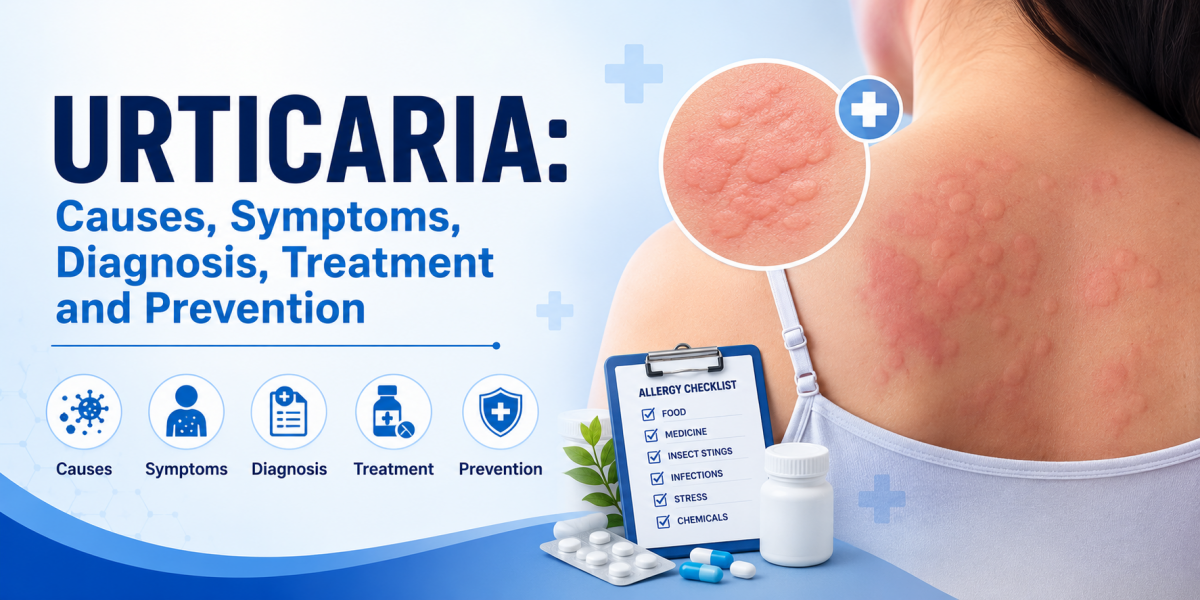
Urticaria: Causes, Symptoms, Diagnosis, Treatment and Prevention
Urticaria, commonly known as hives, is a mast cell–mediated dermatological disorder characterised by the sudden appearance of transient, pruritic wheals, angioedema or both. The lesions result from the release of histamine and other inflammatory mediators from cutaneous mast cells and basophils.
Individual urticarial wheals usually disappear within 24 hours without scarring, although new lesions may continue to develop at other sites. Angioedema involves deeper dermal and subcutaneous tissues and may persist for up to 72 hours.
Urticaria may be acute or chronic and may occur spontaneously or in response to identifiable physical or environmental stimuli. The international urticaria guideline classifies the disorder according to duration and whether lesions develop spontaneously or are induced by specific triggers.
What Is Urticaria?
Urticaria is defined by the development of wheals, angioedema or both.
A typical urticarial wheal has three principal characteristics:
- Central superficial swelling of variable size
- Surrounding reflex erythema
- Pruritus or, occasionally, a burning sensation
Wheals are transient because tissue oedema resolves as mast-cell mediator activity decreases. The lesions may be round, annular, polycyclic or irregular and can merge to form large plaques.
Angioedema
Angioedema is characterised by sudden swelling of the deeper dermis, subcutaneous tissue or submucosal tissue. It commonly affects:
- Eyelids
- Lips
- Face
- Tongue
- Hands
- Feet
- Genital region
Angioedema is often associated with pain, tightness or burning rather than intense pruritus.
Isolated angioedema without wheals may involve mechanisms distinct from histamine-mediated urticaria, including bradykinin-mediated disorders such as hereditary angioedema or angiotensin-converting enzyme inhibitor–associated angioedema.
Classification of Urticaria
Acute Urticaria
Acute urticaria is defined as the occurrence of wheals, angioedema or both for six weeks or less.
It is commonly associated with:
- Acute infections
- Foods
- Medications
- Insect stings
- Contact allergens
The triggering factor may remain unidentified in some cases.
Chronic Urticaria
Chronic urticaria is characterised by recurrent or continuous symptoms lasting more than six weeks.
It is divided into:
- Chronic spontaneous urticaria
- Chronic inducible urticaria
Chronic Spontaneous Urticaria
Chronic spontaneous urticaria refers to recurrent wheals, angioedema or both occurring without a definite external stimulus.
Autoimmune mechanisms contribute to many cases. Some patients develop immunoglobulin G autoantibodies directed against:
- The high-affinity immunoglobulin E receptor, FcεRI
- Immunoglobulin E itself
- Other mast-cell activating targets
In other patients, immunoglobulin E autoantibodies against self-antigens may activate mast cells.
Chronic Inducible Urticaria
Chronic inducible urticaria occurs following reproducible exposure to specific stimuli.
Subtypes include:
- Symptomatic dermographism
- Cold urticaria
- Heat urticaria
- Delayed pressure urticaria
- Solar urticaria
- Cholinergic urticaria
- Aquagenic urticaria
- Contact urticaria
- Vibratory angioedema
Pathophysiology of Urticaria
The central pathological event in urticaria is activation and degranulation of cutaneous mast cells.
Mast-Cell Activation
Mast-cell activation may occur through:
- Immunoglobulin E–mediated allergic reactions
- Autoantibody-mediated receptor activation
- Complement activation
- Direct pharmacological stimulation
- Physical stimuli
- Neuropeptide signalling
- Abnormal intracellular mast-cell pathways
Activated mast cells release inflammatory mediators including:
- Histamine
- Tryptase
- Leukotrienes
- Prostaglandins
- Platelet-activating factor
- Cytokines
- Chemokines
Effects of Histamine
Histamine binds predominantly to H1 receptors and produces:
- Vasodilatation
- Increased vascular permeability
- Dermal oedema
- Sensory nerve stimulation
- Pruritus
- Reflex erythema
The superficial dermal oedema produces a wheal, whereas mediator activity in deeper tissues produces angioedema.
Cellular Infiltration
Urticarial lesions may contain inflammatory cells such as:
- Eosinophils
- Basophils
- Neutrophils
- T lymphocytes
- Monocytes
Chronic urticaria may therefore involve sustained immunological dysregulation rather than isolated histamine release.
Causes and Triggers of Urticaria
Infections
Infections are frequent triggers of acute urticaria, particularly in children.
Associated infections may include:
- Viral upper respiratory tract infections
- Hepatitis
- Infectious mononucleosis
- COVID-19
- Bacterial infections
- Parasitic infestations
The urticaria may result from immune activation rather than direct microbial invasion of the skin.
Foods
Immunoglobulin E–mediated food allergy can cause acute urticaria, usually within minutes to a few hours of ingestion.
Potential triggers include:
- Peanuts
- Tree nuts
- Shellfish
- Fish
- Eggs
- Milk
- Wheat
- Soy
Chronic spontaneous urticaria is rarely caused by persistent food allergy. Routine exclusion diets without a clear temporal association are generally not recommended.
Medications
Drugs associated with urticaria include:
- Penicillins
- Cephalosporins
- Sulphonamides
- Non-steroidal anti-inflammatory drugs
- Opioids
- Radiographic contrast agents
- Vaccines
- Biological agents
Aspirin and other non-steroidal anti-inflammatory drugs may aggravate chronic urticaria through cyclooxygenase inhibition and altered leukotriene metabolism.
Insect Bites and Stings
Bites or stings from mosquitoes, bees, wasps and other insects may produce localised or generalised urticaria.
Physical Stimuli
Physical triggers include:
- Friction or scratching
- Cold exposure
- Heat
- Sunlight
- Exercise
- Sweating
- Water exposure
- Vibration
- Sustained pressure
Cold urticaria can occasionally produce systemic reactions, particularly during swimming or extensive cold-water exposure.
Contact Triggers
Contact urticaria may occur after exposure to:
- Latex
- Animal proteins
- Plants
- Foods
- Cosmetics
- Chemicals
Autoimmune Disease
Chronic spontaneous urticaria may be associated with autoimmune disorders, particularly autoimmune thyroid disease.
However, association does not necessarily indicate direct causation.
Stress
Psychological stress does not usually represent the primary cause but may aggravate symptoms through neuroimmune and mast-cell pathways.
Symptoms of Urticaria
Wheals
Urticarial wheals are:
- Raised
- Well circumscribed
- Pruritic
- Erythematous, pink or skin coloured
- Variable in size and shape
- Transient
In darker skin, erythema may be less visible, while elevation and swelling remain apparent.
Pruritus
Pruritus is usually the dominant symptom and may be severe enough to disturb sleep and daily activity.
Angioedema
Angioedema may produce swelling of the lips, eyelids, tongue, hands or feet. It is usually less itchy but may be painful.
Systemic Symptoms
Simple urticaria does not generally cause persistent fever, joint inflammation or tissue necrosis.
The presence of wheals together with respiratory difficulty, hypotension, gastrointestinal symptoms or collapse suggests anaphylaxis, which is a medical emergency.
Diagnosis of Urticaria
Diagnosis is primarily clinical and is based on lesion morphology, duration, associated symptoms and potential triggers.
Medical History
Important questions include:
- When did the lesions begin?
- How long does each wheal persist?
- Are symptoms spontaneous or stimulus-induced?
- Is angioedema present?
- Are there respiratory or cardiovascular symptoms?
- Are symptoms related to food, drugs, exercise, heat or cold?
- Is there a history of infection?
- Are non-steroidal anti-inflammatory drugs being used?
- Is there a family history of angioedema?
- Do lesions leave bruising or pigmentation?
Photographs are useful when lesions are absent during consultation.
Physical Examination
Examination should assess:
- Distribution and morphology of wheals
- Dermographism
- Angioedema
- Respiratory compromise
- Signs of systemic disease
- Evidence of vasculitis
- Thyroid enlargement
- Infection or inflammatory disease
Laboratory Investigations
Extensive routine testing is not required in uncomplicated acute urticaria.
In chronic spontaneous urticaria, a limited evaluation may include:
- Complete blood count
- C-reactive protein
- Erythrocyte sedimentation rate
Additional investigations should be directed by the history and examination and may include:
- Thyroid-stimulating hormone
- Antithyroid antibodies
- Liver and renal function tests
- Complement levels
- Serum tryptase
- Infection screening
- Skin biopsy
Routine food-allergy testing is not indicated unless there is a consistent immediate relationship between ingestion and symptoms. Guidelines recommend a targeted rather than indiscriminate diagnostic approach.
Provocation Testing
Provocation tests may confirm chronic inducible urticaria.
Examples include:
- Dermographometer testing
- Cold stimulation testing
- Pressure testing
- Exercise or passive warming tests
- Phototesting
- Water-compress testing
Differential Diagnosis
Conditions that may resemble urticaria include:
Urticarial Vasculitis
Lesions usually persist beyond 24 hours and may be painful rather than pruritic. They may leave purpura or residual hyperpigmentation.
Anaphylaxis
Anaphylaxis includes systemic involvement such as bronchospasm, laryngeal oedema, hypotension or gastrointestinal symptoms.
Mastocytosis
Mast-cell proliferative disorders may cause recurrent flushing, pruritus, wheals and systemic mediator-related symptoms.
Autoinflammatory Syndromes
Recurrent urticaria-like eruptions associated with fever, arthralgia or systemic inflammation may indicate an autoinflammatory disorder.
Bradykinin-Mediated Angioedema
Hereditary or acquired C1 inhibitor deficiency and ACE inhibitor–associated angioedema usually occur without wheals and do not respond adequately to antihistamines.
Erythema Multiforme
Lesions are fixed, target shaped and persist longer than typical urticarial wheals.
Treatment of Urticaria
Avoidance of Identified Triggers
Confirmed triggers such as specific medications, physical stimuli or foods should be avoided where feasible.
Unnecessarily restrictive diets should be avoided because most chronic spontaneous urticaria is not caused by food allergy.
Second-Generation H1 Antihistamines
Non-sedating, second-generation H1 antihistamines are the recommended first-line treatment.
Examples include:
- Cetirizine
- Levocetirizine
- Loratadine
- Desloratadine
- Fexofenadine
- Bilastine
- Rupatadine
These agents reduce histamine-mediated pruritus, erythema and wheal formation.
Regular daily dosing is generally more effective in chronic urticaria than intermittent use during severe flares.
Up-Dosing Antihistamines
When symptoms remain uncontrolled, international guidelines support increasing the dose of a second-generation H1 antihistamine up to four times the standard dose under medical supervision.
Different antihistamines should not be combined indiscriminately without clinical guidance.
Omalizumab
Omalizumab is an anti-immunoglobulin E monoclonal antibody used in chronic spontaneous urticaria that remains uncontrolled despite high-dose second-generation antihistamines.
It reduces free immunoglobulin E and downregulates FcεRI receptors on mast cells and basophils.
Ciclosporin
Ciclosporin may be considered in severe refractory chronic spontaneous urticaria when antihistamines and omalizumab are ineffective or unsuitable.
Its use requires monitoring because of potential:
- Nephrotoxicity
- Hypertension
- Drug interactions
- Immunosuppression
Corticosteroids
A short course of systemic corticosteroids may be used for severe acute exacerbations.
Long-term corticosteroid therapy is discouraged because of risks including:
- Hyperglycaemia
- Osteoporosis
- Hypertension
- Adrenal suppression
- Infection
- Weight gain
The recommended treatment sequence progresses from second-generation H1 antihistamines to supervised up-dosing, followed by omalizumab and, in refractory disease, ciclosporin.
Treatment of Anaphylaxis
Urticaria associated with airway compromise, hypotension or systemic anaphylaxis requires immediate intramuscular adrenaline and emergency medical treatment.
Antihistamines do not replace adrenaline in anaphylaxis.
Complications
Potential complications include:
- Angioedema
- Sleep disturbance
- Anxiety and depression
- Reduced occupational or academic performance
- Impaired quality of life
- Anaphylaxis in allergic cases
- Adverse effects from inappropriate corticosteroid use
Chronic urticaria can have a substantial psychological and functional burden despite the absence of permanent skin damage.
Prevention and Trigger Control
Urticaria cannot always be prevented, particularly when it is spontaneous or autoimmune.
Preventive measures include:
- Avoiding confirmed allergens
- Avoiding implicated medications
- Limiting non-steroidal anti-inflammatory drugs when they worsen symptoms
- Protecting against relevant physical stimuli
- Wearing loose clothing in pressure-induced disease
- Avoiding sudden cold-water immersion in cold urticaria
- Treating associated infections when identified
- Maintaining a symptom and trigger diary
- Using prescribed antihistamines regularly
Patients with a history of anaphylaxis may require an adrenaline auto-injector and an emergency action plan.
Urticaria is a mast cell–mediated disorder characterised by transient pruritic wheals, angioedema or both. It may be acute, chronic spontaneous or inducible by specific physical stimuli. Histamine-mediated vasodilatation and increased vascular permeability are responsible for the characteristic cutaneous manifestations.
Diagnosis is primarily clinical, and investigations should be directed by the duration, morphology and associated systemic features. Second-generation H1 antihistamines are the first-line treatment, followed by supervised dose escalation, omalizumab and ciclosporin in selected refractory cases. Identification of triggers, recognition of anaphylaxis and avoidance of unnecessary diagnostic testing are central to effective management.
Frequently Asked Questions
Q1. Is urticaria contagious?
Ans – No. Urticaria itself is not contagious, although an underlying viral or bacterial infection may be transmissible.
Q2. How long does an urticarial wheal last?
Ans – An individual wheal typically resolves within 24 hours. Angioedema may persist for up to 72 hours.
Q3. Is chronic urticaria always caused by allergy?
Ans – No. Chronic spontaneous urticaria is commonly autoimmune or idiopathic and is rarely caused by persistent food allergy.
Q4. Can stress cause urticaria?
Ans – Stress may exacerbate urticaria but is not usually its sole underlying cause.
Q5. Are corticosteroids suitable for long-term treatment?
Ans – No. Long-term systemic corticosteroids are avoided because of significant metabolic, endocrine, skeletal and immunological adverse effects.
Q6. When is urticaria an emergency?
Ans – Emergency care is required when urticaria is accompanied by tongue or throat swelling, breathing difficulty, wheezing, dizziness, hypotension or loss of consciousness.