
Role of MRI in Prostate Cancer: Diagnosis & Management
Prostate cancer is one of the most common cancers in men, and its timely detection plays an important role in improving survival and treatment outcomes. Traditional diagnostic methods often rely on prostate-specific antigen (PSA) testing and biopsies, but these approaches have limitations in accuracy and localisation. The role of MRI in prostate cancer diagnosis and management has gained significant importance in recent years, offering better precision in detecting, staging and guiding treatment strategies.
Why Imaging is Crucial in Prostate Cancer
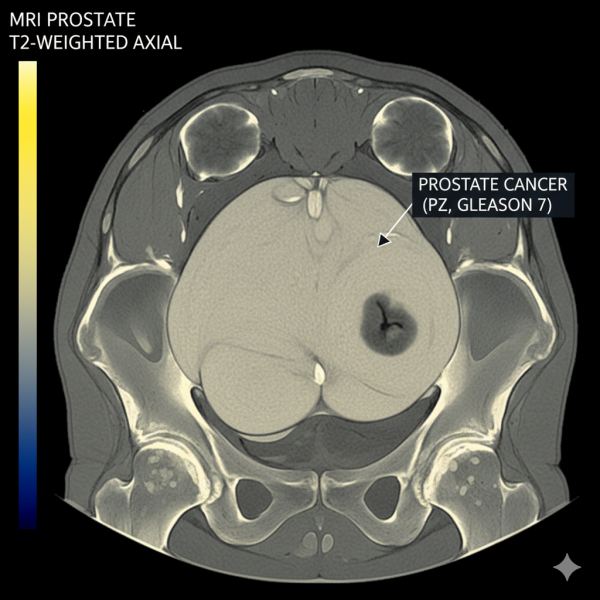
Accurate imaging is the foundation of effective cancer care. In prostate cancer, early detection and precise mapping of the tumour help clinicians decide whether active surveillance, surgery or radiotherapy is the best course of action. Without reliable imaging, patients risk under-treatment or over-treatment, both of which can impact quality of life. Similar to how skin cancers, such as basal cell carcinoma, highlight the need for early recognition, prostate cancer management also depends heavily on advanced imaging.
Role of MRI in Prostate Cancer Diagnosis
MRI has revolutionised the way prostate cancer is diagnosed, allowing for better tumour visualisation and reducing the need for unnecessary biopsies.
Multiparametric MRI (mpMRI) Detection
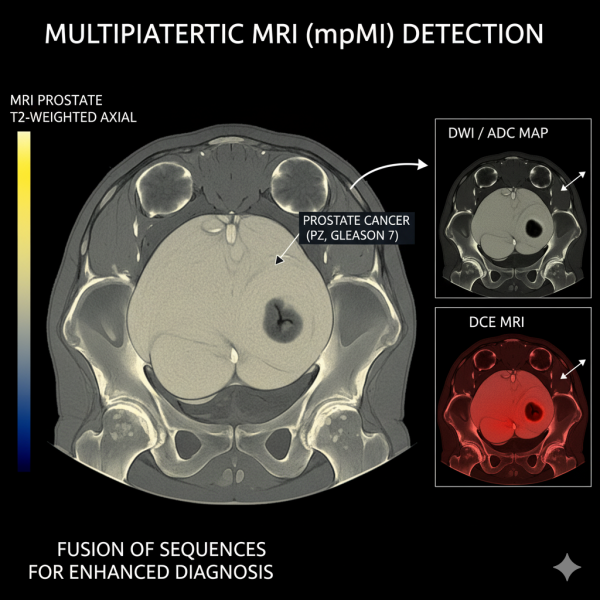
The multiparametric MRI (mpMRI) combines different imaging sequences, including T2-weighted imaging, diffusion-weighted imaging and dynamic contrast enhancement. This combination improves sensitivity in detecting clinically significant prostate cancer while avoiding the detection of indolent tumours that may not require treatment.
Identifying Tumour Location & Aggressiveness
MRI in prostate cancer helps identify the exact location of the tumour within the prostate gland. Additionally, imaging features often correlate with tumour aggressiveness, providing valuable information for risk stratification. This allows clinicians to focus treatment on high-risk areas while minimising side effects.
MRI vs Traditional Biopsy Methods
Traditionally, prostate cancer diagnosis relied on random systematic biopsies, which often missed tumours or detected clinically insignificant cancers. MRI-targeted biopsy significantly improves detection accuracy, reduces over-diagnosis and ensures only clinically important cancers are identified.
MRI in Staging and Treatment Planning
Accurate staging is critical for choosing the right treatment path. MRI is one of the best tools for evaluating tumour extent and guiding personalised treatment.
How MRI Helps in Tumour Staging
MRI provides clear visualisation of whether the cancer is confined to the prostate or has extended beyond (extracapsular extension, seminal vesicle invasion). The staging information helps determine whether surgery, radiotherapy or systemic therapy is most appropriate.
MRI for Active Surveillance
For patients with low-risk prostate cancer, active surveillance is often the preferred strategy. MRI in prostate cancer surveillance helps monitor tumour progression without repeated biopsies, ensuring timely intervention only when necessary.
Guiding Surgery and Radiotherapy
MRI assists surgeons in planning nerve-sparing prostatectomies, improving functional outcomes like urinary continence and sexual health. Similarly, in radiotherapy, MRI ensures accurate targeting of tumour tissues while protecting surrounding healthy organs.
Benefits of MRI in Prostate Cancer Management
- High accuracy in detecting clinically significant cancers
- Non-invasive monitoring for patients under surveillance
- Improved staging and treatment planning
- Reduced the need for unnecessary biopsies
- Better guidance for personalised treatment approaches
Limitations of MRI in Prostate Cancer
Despite its advantages, MRI is not without limitations:
- High cost and limited availability in some regions
- Requires specialised radiology expertise for accurate interpretation
- May still miss small or low-grade tumours
- Not always suitable for patients with certain implants or claustrophobia
Future of MRI in Prostate Cancer Care
Ongoing research aims to enhance the role of MRI in prostate cancer diagnosis and treatment. Emerging techniques such as artificial intelligence (AI)-assisted imaging, PET- MRI fusion and advanced biomarkers are expected to further improve diagnostic accuracy and patient outcomes. MRI will likely remain central to prostate cancer care, integrating seamlessly with precision medicine approaches.
The role of MRI in prostate cancer diagnosis and management is undeniable. From early detection and accurate staging to guiding active surveillance and treatment, MRI has transformed prostate cancer care. While challenges like cost and accessibility remain, advancements in imaging technology promise an even greater impact in the future. For patients and clinicians alike, MRI offers a pathway to more accurate, less invasive and personalised cancer management.
Frequently Asked Questions:
Q1. What is the role of MRI in prostate cancer diagnosis?
Ans – MRI, especially multiparametric MRI (mpMRI) helps detect clinically significant prostate cancers with high accuracy. It provides detailed images of the prostate, identifies tumour location and reduces the need for unnecessary biopsies.
Q2. Is MRI better than biopsy for prostate cancer?
Ans – MRI is not a replacement for biopsy, but complements it. MRI-targeted biopsies are more accurate than traditional random biopsies, helping detect aggressive cancers while avoiding the diagnosis of insignificant ones.
Q3. How is MRI used in prostate cancer staging?
Ans – MRI provides clear images of whether the cancer is confined to the prostate or has spread to nearby tissues like the seminal vesicles. This staging information is crucial for choosing surgery, radiotherapy or systemic treatments.
Q4. Can MRI detect all types of prostate cancer?
Ans – MRI is highly effective in detecting medium to high-risk prostate cancers, but it may miss very small or low-grade tumours. However, these cancers are often less aggressive and may not require immediate treatment.
Q5. What are the benefits of MRI in prostate cancer management?
Ans – MRI offers precise tumour detection, which helps avoid unnecessary biopsies, supports active surveillance and guides surgical or radiotherapy planning, improving treatment outcomes and reducing side effects.
Q6. Are there any limitations of MRI in prostate cancer?
Ans – Yes, MRI can be expensive,e requires experienced radiologists and may not be suitable for patients with certain implants or severe claustrophobia. Availability may also be limited in some areas.
Q7. Is MRI recommended for all prostate cancer patients?
Ans – MRI is increasingly recommended before biopsy and for treatment planning. However, the decision depends on clinical evaluation, PSA levels and risk factors, which should be discussed with a urologist or oncologist.