How to Use Personal Protective Equipment (PPE) in Hospitals: Step-by-Step Guide
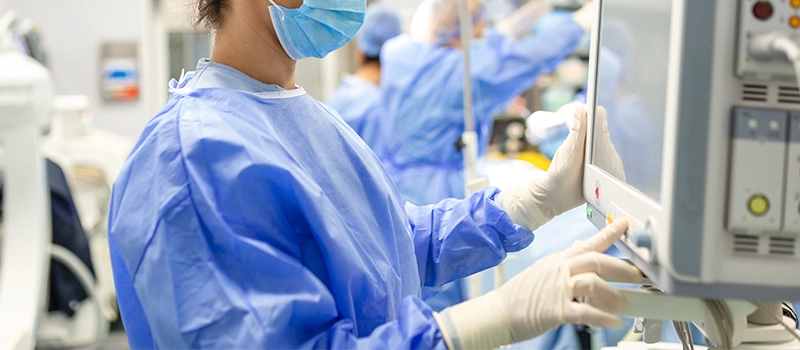
In healthcare settings, Personal Protective Equipment (PPE) serves as the first line of defence against the transmission of infections. Whether dealing with a patient diagnosed with an infectious disease, working in a surgical setting or managing hazardous waste, PPE plays an important role in protecting both healthcare professionals and patients.
Despite its importance, improper use of PPE can compromise infection control and pose serious health risks. This blog provides a detailed guide on how to wear a PPE kit correctly, common mistakes to avoid, and how to dispose of PPE items safely using the four types of dustbins in hospital waste management systems.
What is PPE in Hospitals?
PPE in hospitals refers to specialised clothing and equipment designed to protect healthcare professionals from infectious agents, bodily fluids, and hazardous substances. It ensures hospital safety and limits the spread of disease within healthcare environments.
Common PPE items in hospitals:
- Gloves: Prevent contamination of hands.
- Gowns / Coveralls: Protect body and clothing.
- Surgical Masks/ N95 Respirators: Shield the respiratory tract from airborne pathogens.
- Face Shields/Goggles: Guard the eyes from splashes.
- Head Covers and Shoe Covers: Provide additional hygiene in sterile environments.
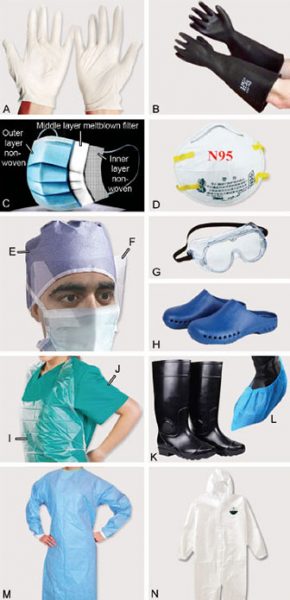
Image sources: https://www.jaypeedigital.com/eReader/chapter/9789354659386/ch37
PPE requirements may vary depending on the hospital area (e.g., ICU, isolation ward) and type of exposure anticipated.
When is PPE Required in Hospitals?
Understanding when to use PPE is vital for every healthcare worker. It is not always required, but specific circumstances call for its mandatory use.
Key scenarios requiring PPE use:
- During patient examination, especially for patients suspected of having an infectious disease.
- Surgical procedures involve exposure to blood, body fluids, or open wounds.
- Isolation wards and ICUs, where patients with contagious diseases are admitted.
- Sample collection and testing to prevent contamination during diagnostic procedures.
- Handling biomedical waste to avoid contact with infectious or hazardous waste materials.
By following proper Personal Protective Equipment guidelines, healthcare providers can significantly reduce the risk of hospital-acquired infections.
How to Wear a PPE Kit: Step-by-Step
The donning process (putting on PPE) must be done methodically and hygienically. Here’s how to ensure your PPE provides full protection.
Step 1: Perform Hand Hygiene
- Use an alcohol-based hand rub or wash with soap and water for at least 20 seconds before touching any PPE components.
Step 2: Wear the Gown or Coverall
- Fully cover the torso from neck to knees and arms to wrists.
- Fastens ties securely at the back of the neck and waist.
- If using a coverall, zip it up completely and ensure there are no exposed areas.
Step 3: Don the Mask or Respirator
- Place the mask over the nose, mouth, and chin.
- Secure the straps behind the ears or head.
- For N95 respirators, perform a fit check to ensure proper sealing.
Step 4: Add Eye Protection
- Position goggles or a face shield over your eyes and adjust for comfort and full coverage.
- Ensure it doesn’t obstruct vision or slip during work.
Step 5: Wear Gloves
- Extend the glove cuffs over the grow’s wrist area.
- Ensure a snug fit to eliminate gaps between the skin and the glove.
Step 6: Shoe and Head Covers
- Wear if required in high-sterility areas like operation theatres or ICUs.
- This helps maintain environmental hygiene.
How to Remove a PPE Kit Safely
Removing PPE incorrectly is a major cause of contamination. The doffing process (removal) must be slow and strategic.
Key Principle: Never touch the front surface of any PPE item during removal.
Proper Order of Removal:
Gloves
- Use the glove-in-glove technique to remove without touching the skin.
- Dispose of in the yellow bin as per hospital waste segregation protocol.
Gown or Coverall
- Unfasten ties carefully.
- Peel away from the body, turning it inside out, and discard in the yellow bin.
Eye Protection
- Remove from the back or side.
- Clean with disinfectant if reusable, or dispose of if single-use.
Mask/Respirator
- Remove by handling only the straps.
- Do not touch the front surface.
- Discard in the red or yellow bin as per hospital guidelines.
Final Hand Hygiene
- Perform handwashing again for at least 20 seconds.
Importance of Biomedical Waste Segregation:
PPE disposal must align with hospital waste management policies. Hospitals in India follow the 4 types of dustbins:
| Color | Type of Waste |
| Yellow | Infectious waste like masks, gloves, gowns |
| Red | Contaminated plastic, such as IV sets, tubes |
| Blue | Glass items like vials, ampoules |
| Black | General waste (non-infectious, non-sharp) |
Common Mistakes While Wearing PPE
Despite training, healthcare workers often make errors during PPE use. These mistakes can compromise personal safety and the overall infection control system.
Common PPE Mistake:
- Skipping hand hygiene before and after use
- Wearing PPE items in the wrong sequence
- Using ill-fitting masks or gowns
- Touching face, phone or surfaces while wearing PPE
- Not disposing of PPE in the appropriate dustbins
- Reusing single-use PPE without sterilisation
FAQs on PPE in Hospitals
Q1. How do you use PPE step by step?
Ans – To put on your PPE safely and correctly:
- Clean your hands and wrists using alcohol-based hand rub or gel, or use soap and water.
- Put on an apron and tie it at the waist.
- Put on a face mask.
- Fit mask around nose – cover mouth and chin.
- Put on eye protection.
- Put on gloves if exposure to blood or body fluids is likely (risk assessment).
Q2. How often should PPE be changed?
Ans – PPE should be changed after every patient interaction, especially if contaminated. Masks and gloves are typically single-use.
Q3. Are PPE kits reusable?
Ans – Some PPE, like face shields and goggles, are reusable after proper disinfection. However, items like gloves, masks, and gowns are single-use unless otherwise specified.
Q4. Can I wear PPE for long hours?
Ans – Extended PPE use can lead to discomfort and skin irritation. It is advised to take breaks when possible, following shift protocols.
Q5. What happens if PPE is not used correctly?
Ans: Improper use leads to self-contamination, increased infection spread and puts both patients and healthcare staff at risk.
Q6. What is the easy way to remember the PPE sequence?
Ans – To simplify the process, employees can follow these easy-to-remember guidelines: don PPE from the bottom up—starting with the gown, followed by the mask, goggles, and gloves (when raised above the head). When removing PPE, follow alphabetical order—gloves first, then goggles, gown, and finally the mask.