DNA Fingerprinting in Forensic Science: Definition, Process & Real-World Applications
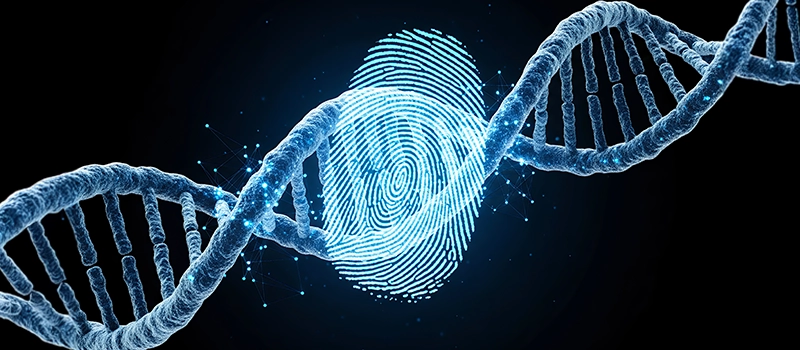
Forensic science has seen groundbreaking advancements over the past few decades, and one of the most revolutionary is DNA fingerprinting. Often referred to as genetic fingerprinting or DNA profiling, this technique has become the gold standard for individual identification. Unlike traditional fingerprints, which may sometimes be smudged or incomplete, DNA evidence is unique to every person (except identical twins) and remains unchanged throughout life.
In modern law enforcement and judicial systems, DNA fingerprinting in forensic science is indispensable. From solving high-profile murder cases to setting paternity disputes and even exonerating the wrongly accused, this scientific method has transformed how justice is served.
This article explores the definition of DNA fingerprinting, its step-by-step process and its real-world applications in forensic science while also addressing common questions surrounding its accuracy and ethical concerns.
What is DNA Fingerprinting?
DNA Fingerprinting is a laboratory technique used to identify an individual based on unique patterns in their DNA sequence. While humans share about 99.9% of their DNA, the remaining 0.1% contains enough variation to distinguish one person from another. Scientists analyse these variable regions known as polymorphisms to create a DNA profile or genetic barcode.
Key Points in Definition:
- Also called genetic fingerprinting or DNA profiling.
- Relied on analysing specific DNA markers such as short tandem repeats (STRs).
- Produces a unique pattern that can be matched against other samples.
A Brief History of DNA Fingerprinting
The concept of DNA Fingerprinting was pioneered in 1984 by Sir Alec Jeffreys at the University of Leicester, UK. He discovered that certain regions of DNA showed highly variable patterns among individuals. By analysing these variations, he developed a technique to create unique DNA patterns.
- The first real-world application came in a paternity case in 1985.
- In 1986, DNA fingerprinting was used in a criminal investigation to solve two rape-murder cases in England.
- Since then, it has become standard practice worldwide in criminal investigations, immigration cases and disaster victim identification.
DNA Fingerprinting and Forensic Science
Forensic science aims to uncover the truth and provide scientific evidence in legal cases. Traditional identification methods such as fingerprint analysis, blood typing and eyewitness accounts often have limitations. DNA fingerprinting overcame these barriers by offering individual-specific, scientifically reliable evidence.
Role in Forensic Science:
- Crime Scene Investigations- DNA from blood, hair, saliva, or skin cells links suspects to crime scenes.
- Paternity and Family Disputes- Determines biological relationships with near-perfect accuracy.
- Disaster Victor Identification- Identifies victims in plane crashes, earthquakes and wars.
- Cold Cases- Helps reopen and solve old cases where biological evidence was preserved.
- Exoneration- DNA testing has freed hundreds of wrongfully convicted individuals worldwide.
DNA Fingerprinting vs. DNA Profiling
While both terms are often used interchangeably, there are subtle distinctions:
- DNA Fingerprinting: The earlier technique (1980s – 1990s) was based on restriction fragment length polymorphism (RFLP) analysis.
- DNA Profiling: The modern technique, which uses highly sensitive methods like STR analysis and PCR amplification for faster, more accurate results.
Process of DNA Fingerprinting in Forensic Science
The process of systematic and ensures accurate, tamper-proof results. Below are the main steps:
- Collection of Samples: Biological materials such as blood, semen, saliva, hair follicles, or skin cells are collected from crime scenes, victims or suspects.
- DNA Extraction: The DNA is isolated from the cell nucleus using chemical or mechanical methods.
- DNA Quantification & Quality Check: Ensures that enough DNA is available and free from contamination.
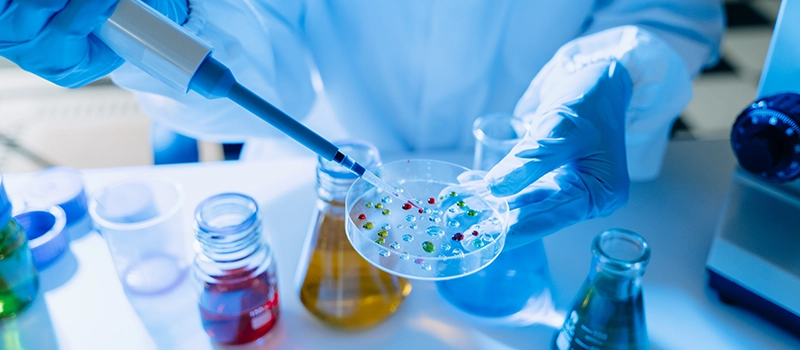
- PCR Amplification: Using Polymerase Chain Reaction (PCR), small DNA samples are amplified to generate sufficient material for analysis.
- Fragment Separation (Electrophoresis): DNA fragments are separated on a gel or capillary system based on size, creating visible banding patterns.
- DNA Profiling: The STR markers are analysed to create a unique DNA profile.
- Comparison and Matching: The obtained profile is compared with samples from suspects, victims or databases like CODIS (Combined DNA Index System).
Real-World Applications of DNA Fingerprinting in Forensic Science
- Criminal Justice
- Identifies perpetrators with unmatched accuracy.
- Links repeat offenders to multiple crimes.
- Provides solid, scientific evidence in court.
- Paternity and Family Law
- Establishes biological relationships in inheritance disputes.
- Aids in immigration cases by confirming family ties.
- Disaster Victim Identification (DVI)
- Identifies victims when physical recognition is impossible.
- Used 9/11 attacks, tsunami disasters and air crashes.
- Cold Cases and Exonerations
- Reopens decades-old cases with preserved DNA evidence.
- Has helped free wrongly convicted prisoners.
- Wildlife and Environmental Forensics
- Tracks poaching activities by analysing animal DNA.
- Monitors illegal trade in endangered species.
Advantages of DNA Fingerprinting
- High accuracy – Near 100% identification reliability.
- Small sample requirement – Only tiny traces of DNA are needed.
- Wide application – From crime-solving to medical research.
- Durability – DNA remains stable even in degraded conditions.
Limitations and Ethical Concerns
While DNA fingerprinting is powerful, it is not without challenges:
- Sample Contamination – Mishandling can lead to false results.
- Partial Profiles – In degraded samples, incomplete profiles may reduce accuracy.
- Privacy Concerns – DNA databases raise concerns over misuse and genetic surveillance.
- Cost & Resources – Requires advanced labs and trained experts.
Future of DNA Fingerprinting in Forensic Science
With the rapid advancement of technology, the future looks promising:
- Rapid DNA Testing – On-the-spot DNA identification in under two hours.
- Next-Generation Sequencing (NGS) – More detailed genetic analysis beyond STRs.
- Global DNA Databases – Enhanced cross-border crime investigation.
- AI Integration – Automating DNA data interpretation for faster results.
DNA fingerprinting in forensic science is more than just a scientific breakthrough—it is a cornerstone of modern justice. By accurately identifying individuals, solving crimes, and reuniting families, it bridges the gap between science and law. Whether called DNA fingerprinting, DNA profiling, or genetic fingerprinting in forensic science, the technique continues to evolve with technology, making the legal system fairer and reliable.
Frequently Asked Questions:
Q1. What is DNA fingerprinting used for in forensic science?
It is used to identify suspects, exonerate innocents, solve paternity disputes, and identify disaster victims.
Q2. Is DNA fingerprinting 100% accurate?
While highly reliable, factors like contamination, partial DNA, or lab errors can affect accuracy. However, it is considered the most precise forensic tool available.
Q3. How is DNA fingerprinting different from regular fingerprinting?
Regular fingerprints analyse physical ridge patterns on fingers, whereas DNA fingerprinting analyses genetic material that is unique to each person.
Q4. Can DNA fingerprinting distinguish identical twins?
Standard DNA profiling cannot differentiate identical twins, as their DNA is nearly identical. However, advanced techniques like epigenetic analysis can help.
Q5. Is DNA fingerprinting widely accepted in courts?
Yes, DNA evidence is legally admissible worldwide and is considered one of the strongest forms of forensic evidence.