INI-CET May 2026 Recall Questions with Answers PDF Download
📄 INI-CET 2026 May Recall Questions Answers · Free · Instant Download
INI-CET Anatomy 2026 Recall Questions with Answers

Q1. In the diagram of the abdominal wall musculature, the muscle labelled ‘X’ and the structure formed by its aponeurosis are best identified as:
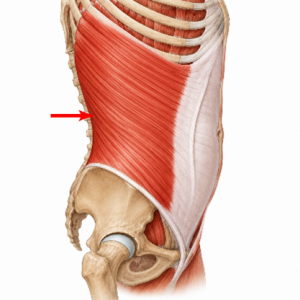
- External oblique — Inguinal ligament
- Internal oblique — Conjoint tendon
- Transversus abdominis — Conjoint tendon
- Rectus abdominis — Linea alba
Answer: A
Q2. In the labelled diagram of laryngeal intrinsic muscles, which labelled muscle is solely responsible for the abduction of the vocal cords?
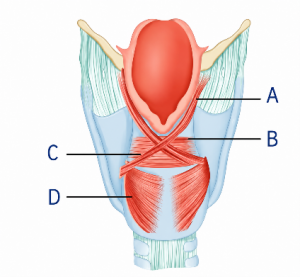
- Muscle labelled ‘ a’ (Posterior cricoarytenoid)
- Muscle labelled ‘b’
- Muscle labelled ‘c’
- Muscle labelled ‘d’
Answer: A
Q3. Which muscle, as shown in the diagram, attaches to the cartilaginous portion of the Eustachian tube and also blends with the soft palate?
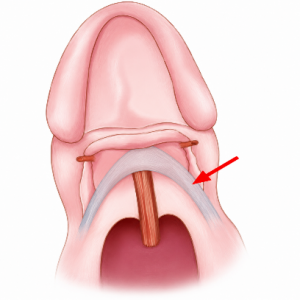
- Stylopharyngeus
- Tensor veli palatini
- Levator veli palatini
- Palatopharyngeus
Answer: C
Q4. Match each of the following organs with its correct embryological tissue of origin:
| Organ | Embryological Origin |
| A. Thyroid gland | 1. Neural crest cells |
| B. Adrenal medulla | 2. Intermediate mesoderm |
| C. Kidney | 3. Endoderm |
- A–3, B–1, C–2
- A–1, B–3, C–2
- A–2, B–1, C–3
- A–1, B–2, C–3
Answer: A
Q5. Match each of the following gastrointestinal organs with its distinctive histological feature:
| Organ | Histological Feature |
| 1. Ileum | a. Taenia coli |
| 2. Transverse colon | b. Villi |
| 3. Oesophagus | c. Peyer’s patches |
| 4. Duodenum | d. Non-keratinised stratified squamous epithelium |
- 1-c, 2-a, 3-d, 4-b
- 1-a, 2-c, 3-d, 4-b
- 1-c, 2-b, 3-a, 4-d
- 1-d, 2-a, 3-c, 4-b
Answer: A
Q6. A developmental remnant of the embryological hindgut persisting in the retrorectal (presacral) space is most likely to give rise to which of the following lesions?
- Chondroma
- Tailgut cyst
- Epidermoid cyst
- Dermoid cyst
Answer: B
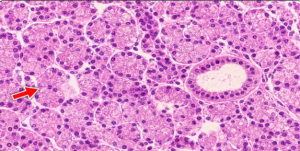
Q7. The histological section shown in the image, characterised by predominantly serous acini, is best identified as which organ?
- Sublingual salivary gland
- Pancreas
- Parotid gland
- Liver
Answer: C
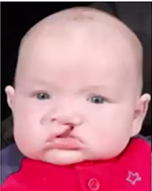
Q8. A failure of fusion of the maxillary process with the medial nasal process during embryonic development results in which type of cleft anomaly?
- Oblique cleft lip
- Midline cleft lip
- Bilateral cleft
- Cleft palate
Answer: B
INI-CET Physiology 2026 Recall Questions with Answers
Q1. Which physiological abnormality increases renin secretion?
- Reduced renal perfusion pressure
- Increased extracellular fluid volume
- Elevated renal perfusion pressure
- Elevated sodium load to the macula densa
Answer: A
Q2. Damage to the glomerular capillary wall causes which of the following to appear in urine?
- Uric acid
- Glucose
- Ketones
- Proteins
Answer: D
Q3. Emotional tone and prosody of speech are primarily controlled by which brain region?
- Posterior superior temporal gyrus
- Posterior inferior parietal gyrus
- Precentral gyrus
- Cingulate gyrus
Answer: D
Q4. Reason for biphasic flow in the right coronary artery?
- Increased aortic pressure
- Increased right ventricular mass
- High pressure in the right ventricle
- Low pressure in the right ventricle
Answer: D
Q5. Which adrenergic or muscarinic receptor subtype is coupled to the Gs protein?
- M1 receptor
- M2 receptor
- Alpha adrenergic receptor
- Beta adrenergic receptor
Answer: D
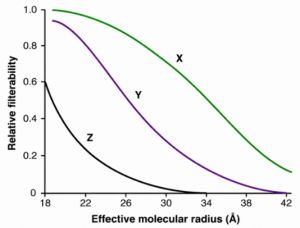
Q6. In a graph of glomerular filterability vs. effective molecular radius, if X and Y are two molecules, which statement is correct?
- Y has more filterability than X
- Y has more filterability than Z
- X has less filterability than Y
- X represents positively charged molecules
- 1 and 2
- 2 and 3
- 3 and 4
- 1 and 4
Answer: C
Q7. Which sensory receptor generates a hyperpolarising receptor potential upon stimulation?
- Visual receptor (rods/cones)
- Gustatory receptor
- Olfactory receptor
- Auditory receptor
Answer: A
Q8. Which cerebral lobe primarily governs hand–eye coordination?
- Frontal
- Parietal
- Occipital
- Temporal
Answer: B
Q9. Which structure in the nephron functions as the counter-current multiplier to help concentrate urine?
- Thick ascending loop of Henle
- Thin ascending loop of Henle
- Collecting duct
- Vasa recta
Answer: A
Q10. Following a bolus administration of insulin, which of the following occurs?
- Glucose uptake into the liver via GLUT 4
- Glucose uptake into muscle via GLUT 4
- Glucose uptake into muscle via GLUT 2
- Glucose uptake into the liver via GLUT 2
Answer: B
Q11. If a patient is on testosterone therapy, what changes can one see in LH and FSH levels?
- Increased LH, decreased FSH
- Decreased LH, increased FSH
- Increased LH, increased FSH
- Decreased LH, decreased FSH
Answer: D
Q12. During oral rehydration therapy in diarrhoea, which transporter is most active in promoting fluid absorption?
- CFTR
- NHE
- SGLT1
- Na+-K+ ATPase
Answer: C
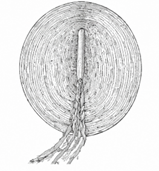
Q13. Identify the skin receptor shown in the image:
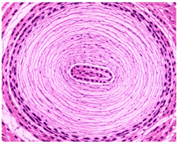
- Pacinian corpuscle
- Merkel disc
- Ruffini ending
- Meissner corpuscle
Answer: A
Q12. The intercalated disc is composed of:
- Cadherins
- Desmosomes
- Gap junctions
- Tight junctions
- 1, 2 and 3
- 2, 3 and 4
- 1, 3 and 4
- 1,2, 3 and 4
Answer: A
Q13. Which of the following statements regarding hormones and their metabolic actions are correct?
- Insulin increases protein synthesis
- Thyroxine decreases basal metabolic rate
- Insulin decreases blood glucose levels
- Epinephrine increases glycogenolysis
- Glucagon increases gluconeogenesis
- A, B and C only
- A, C and D only
- A, C, D and E only
- All of the above
- Answer: C
INI-CET Biochemistry 2026 Recall Questions with Answers
Q1. Elevated serum triglyceride levels are observed in all of the following conditions EXCEPT:
- Abetalipoproteinemia
- Type 2 diabetes mellitus
- High fructose diet
- Nephrotic syndrome
Answer: A
Q2. Which molecular biotechnology is depicted in the image shown below:

- Microarray analysis
- In situ hybridisation
- CRISPR-Cas9 gene editing system
- DNA sequencing
Answer: C
Q3. Which coenzyme is essential for carrying out transamination reactions in amino acid metabolism?
- Thiamine pyrophosphate (TPP)
- Nicotinamide adenine dinucleotide (NAD)
- Pyridoxal phosphate (PLP)
- Flavin adenine dinucleotide (FAD)
Answer: C
Q4. Which of the following gives a negative Benedict’s test?
- Sucrose
- Glucose
- Fructose
- Ascorbic acid
Answer: A
Q5. Match the following:
| 1. Metabolic acidosis | a. Hyperventilation |
| 2. Metabolic alkalosis | b. Bronchopneumonia |
| 3. Respiratory acidosis | c. Pyloric stenosis |
| 4. Respiratory alkalosis | d. Glycol poisoning |
- 1-c, 2-d, 3-b, 4-a
- 1-c, 2-d, 3-a, 4-b
- 1-a, 2-c, 3-b, 4-d
- 1-d, 2-c, 3-b, 4-a
Answer: D
Q6. Match the following:
| 1. Most essential fatty acid: | a. Safflower oil |
| 2. Amino acid (AA) score | b. Protein scoring system |
| 3. Oil rich in essential fatty acids | c. Protein quality + digestibility |
| 4. Net Protein Utilisation (NPU) | d. Linoleic acid |
- 1-d, 2-c, 3-a, 4-b
- 1-b, 2-d, 3-c, 4-a
- 1-d, 2-b, 3-a, 4-c
- 1-a, 2-b, 3-d, 4-c
Answer: C
Q7. Assertion: The structural diversity of glycans exceeds that of proteins.
Reason: Glycans are not assembled using a genetic template and can form branched chains with variable linkages.
- A is true, but R is false
- A is false, but R is true
- Both A and R are true, and R is the correct explanation of A
- Both A and R are true, but R is not the correct explanation of A
Answer: C
Q8. Which of the following enzymes are active in the dephosphorylated state?
- Glycogen synthase
- Glycogen phosphorylase
- Fructose-2,6-bisphosphatase
- Phosphofructokinase-2 (PFK-2)
- 1 and 2
- 2 and 3
- 3 and 4
- 1 and 4
Answer: D
Q9. In DNA replication, which enzyme synthesises RNA primers?
- Topoisomerase
- DNA polymerase II
- DNA polymerase III
- Primase
Answer: D
Q10. Which of the following amino acid classifications are correctly matched?
- Uncharged polar AA – Cysteine
- Nonpolar AA – Histidine
- Basic AA – Proline
- Basic AA – Lysine
- A and B
- C and D
- B and C
- A and D
Answer: D
Q11. A newborn presents with craniofacial abnormalities, severely reduced muscle tone, and seizures. Biochemical analysis reveals elevated very long-chain fatty acids in serum. What is the most likely underlying cause?
- Mitochondrial inheritance
- Lysosomal storage disorder
- Peroxisomal biogenesis defect
- Simultaneously activate multiple tumour suppressor genes
Answer: C
Q12. A laboratory worker accidentally inhales fumes of an oxidative phosphorylation uncoupling agent. Which of the following physiological changes is most likely to occur?
- ↓ O2 consumption, ↑ Body temperature, ↑ ATP production
- ↑ O2 consumption, ↑ Body temperature, ↓ ATP production
- ↑ O2 consumption, ↓ Body temperature, ↑ ATP production
- ↓ O2 consumption, ↓ Body temperature, ↓ ATP production
Answer: B
INI-CET Microbiology 2026 Recall Questions with Answers
Q1. The image shown depicts a piece of sterilisation equipment. Which of the following statements regarding its sterilisation properties is INCORRECT?
- It is a method of moist heat sterilisation operating above 100°C
- Bowie-Dick test positive
- Prions are destroyed at 121°C for 15 minutes
- It is commonly used for sterilising culture media
Answer: C
Q2. A 32-year-old woman with a history of splenectomy presents to the emergency department with sudden-onset high-grade fever, vomiting, hypotension, and rapidly progressive septic shock. Her symptoms began 2 weeks after a minor febrile illness. Which organism is the most likely causative agent of this life-threatening condition?
- Escherichia coli
- Staphylococcus aureus
- Streptococcus pneumoniae
- Pseudomonas aeruginosa
Answer: C
Q3. Which of the following reagents is used for the digestion and decontamination of a sputum sample collected for tuberculosis diagnosis?
- HCl with NAC
- H₂SO₄ with NAC
- HNO₃ with NALC
- NaOH with NALC
Answer: D
Q4. A patient presents with fever, headache, and neck stiffness suggestive of meningitis. CSF examination is performed, and Nigrosin stain reveals encapsulated budding yeast cells. Which of the following organisms is the most likely causative agent?
- Aspergillus fumigatus
- Pneumocystis jirovecii
- Histoplasma capsulatum
- Cryptococcus neoformans
Answer: D
Q5. A female presents with high-grade fever, diffuse erythematous rash and hypotension. She is currently menstruating and using tampons. The toxin responsible acts by?
- MHC class I molecule only
- CD4 receptor only
- B-cell receptor and IgG
- Vβ region of the T-cell receptor and MHC class II molecule
Answer: D
Q6. A young female presents with fatigue, pallor, and symptoms suggestive of iron deficiency anemia. A microscopic image of her stool examination is provided. Which of the following statements is correct regarding the parasite identified?
- Infection occurs by ingestion of cysts in contaminated food or water
- Infection occurs by active penetration of infective larvae through the skin
- The image represents eggs of Enterobius vermicularis
- The parasite shown is Ascaris lumbricoides
Answer: B
Q7. Which of the following statements are true about diphtheria toxin?
- It inhibits EF-2
- It is an A-B type exotoxin
- It has a particular affinity for myocardial and nervous tissue
- Toxin is produced only by strains carrying a plasmid
Choose the correct answer:
- A and C
- A, B and C
- All are correct
- B and D
Answer: B
Q8. The virulence of Bacillus anthracis is mediated by two key plasmid-encoded factors. Which of the following is the correct biochemical composition?
- pXO1 poly-D-glutamate capsule
- pXO1 polysaccharide capsule
- pXO2 polysaccharide capsule
- pXO2 poly-D-glutamate capsule
Answer: A
Q9. A 38-year-old man with advanced HIV infection (CD4 count: 60 cells/mm³) presents with chronic watery diarrhea for 2 months, significant weight loss, intermittent fever, and fatigue. Colonoscopy is performed, and biopsy from the colonic mucosa demonstrates trophozoites with RBCs. What is the most likely causative organism?
- Giardia lamblia
- Cryptococcus neoformans
- Cryptosporidium parvum
- Entamoeba histolytica
Answer: D
Q10. Which of the following bacteria possesses two circular DNA molecules (i.e., two distinct chromosomes) in its genome?
- Escherichia coli
- Vibrio cholerae
- Salmonella typhi
- Shigella dysenteriae
Answer: B
Q11. A diabetic patient presents with facial pain, black nasal eschar and eye pain following corticosteroid therapy. What is the etiological agent?
- Candida tropicalis
- Aspergillus fumigatus
- Cryptococcus neoformans
- Rhizopus
Answer: D
INI-CET Pathology 2026 Recall Questions with Answers
Q1. Which of the following vasculitides is NOT classified as a medium-vessel disease?
- Microscopic polyangiitis (MPA)
- Polyarteritis nodosa (PAN)
- Buerger’s disease (Thromboangiitis obliterans)
- Kawasaki disease
Answer: A
Q2. A 12-year-old presents with hypertension and hematuria. Serum C3 is raised. Renal biopsy shows subepithelial hump deposits on EM. What is the most likely diagnosis?
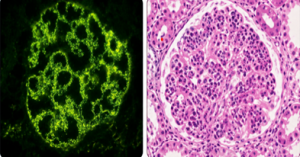
- Goodpasture syndrome
- Membranous glomerulonephritis
- Post-streptococcal glomerulonephritis (PSGN)
- Minimal change disease
Answer: C
INI-CET Pharmacology 2026 Recall Questions with Answers
Q1. Calculate the Therapeutic Index of the given drug from the dose-response curve below:
- 0.25
- 0.75
- 2
- 4
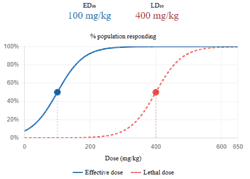
Answer: D
Q2. What is the mechanism of action of Resmetirom?
- Blockage at NPC1L1 transporter
- Activation of PPAR-γ
- Blockage of Acetyl-CoA carboxylase
- Stimulation of Thyroid Hormone Receptor-β
Answer: D
INI-CET FMT 2026 Recall Questions with Answers
Q1. A 16-year-old rape survivor presents at 16 weeks of pregnancy. All of the following are responsibilities of the examining doctor EXCEPT:
- Fetal tissues for DNA preservation
- Inform the police
- MTP, if needed, can be conducted based on one doctor’s opinion
- Parents’ consent for medicolegal examination
Answer: D
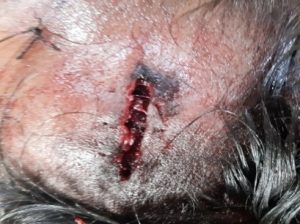
Q2. The injury shown in the image is best described as:
- Laceration
- Contusion
- Stab injury
- Bomb blast
Answer: A
INI-CET Ophthalmology 2026 Recall Questions with Answers
Q1. A patient has a sudden, painful loss of vision with RAPD but a normal-appearing optic disc on fundoscopy. What is the diagnosis?
- AION
- Central retinal artery occlusion
- Retrobulbar neuritis
- Papilledema
Answer: C
Q2. What is the expected amplitude of accommodation in a healthy child?
- 2D
- 5D
- 14D
- 25D
Answer: C
INI-CET ENT 2026 Recall Questions with Answers
Q1. A patient develops acute-onset severe unilateral hearing loss with no identifiable cause. Audiometry confirms sensorineural hearing loss. Which of the following pharmacological regimens is considered the first-line treatment for this condition?
- Intratympanic steroid injections
- Topical steroid ear drops
- Gentamicin combined with systemic steroids
- Oral prednisolone (systemic corticosteroids)
Answer: D
Q2. A patient is evaluated for a rare orofacial syndrome. The classical diagnostic triad of this condition is being reviewed. Which of the following is NOT a component of the Melkersson-Rosenthal syndrome triad?
- Lower motor neuron facial palsy
- Proptosis (forward displacement of the eyeball)
- Orofacial granulomatous oedema
- Fissured (scrotal) tongue
Answer: B
INI-CET Community Medicine 2026 Recall Questions with Answers
- Calculate the Odds Ratio with the following data:
| Cancer | No Cancer | |
| Smoking | 80 | 20 |
| No Smoking | 40 | 60 |
- 6
- 8
- 10
- 12
Answer: A
Q2. Assertion: In a nested case-control study, incidence rates can be derived from the parent cohort.
Reason: Nested case-control studies can estimate relative risk accurately.
- Both assertion and reason are correct, and the reason is the correct explanation of the assertion
- Both assertions and reasons are correct, but they are unrelated
- The assertion is correct, but the reason is incorrect
- The assertion is incorrect, but the reason is correct
Answer: B
INI-CET Obgyn Medicine 2026 Recall Questions with Answers
Q1. A 34-year-old female, G2P1, with a history of pre-eclampsia in her previous pregnancy, comes for her first ANC visit at 12 weeks. What is the most appropriate intervention for the prevention of pre-eclampsia in her current pregnancy?
- Low-dose aspirin
- Low-dose aspirin with Low Molecular Weight Heparin (LMWH)
- Low calcium intake
- Low salt intake
Answer: A
Q2. A 21-year-old girl presents with primary amenorrhea. Examination shows an absent uterus, present breast development, and sparse pubic and axillary hair. What is the genetic aetiology?
- MRKH
- Androgen insensitivity
- Turner’s syndrome
- CAH
Answer: A
INI-CET Medicine 2026 Recall Questions with Answers
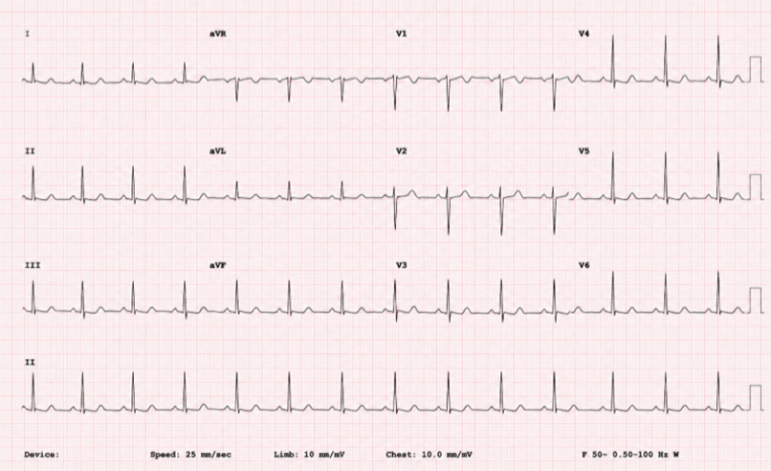
Q1. A 58-year-old male presents with crushing chest pain radiating to the jaw. His ECG reveals ST-segment elevation in leads II, III, and aVF. Which coronary artery is most likely occluded?
- Right coronary artery
- Posterior descending artery
- Left circumflex artery
- Anterior interventricular artery
Answer: A
Q2. A patient presents with hypercalcemia due to malignancy. According to the correct sequence of management, what should be the first step?
- Administration of loop diuretics
- Intravenous rehydration with normal saline
- Administration of bisphosphonates
- Other supportive measures
Answer: B
INI-CET Paediatrics 2026 Recall Questions with Answers
Q1. A neonate presents with prolonged neonatal jaundice, an umbilical hernia, and generalised hypotonia. Which of the following is the most likely underlying diagnosis?
- Galactosemia
- Down syndrome
- Biliary atresia
- Congenital hypothyroidism
Answer: D
Q2. A child diagnosed with Dravet syndrome is receiving multi-drug anti-seizure therapy and is being considered for add-on treatment with fenfluramine. Which of the following monitoring strategies is most critical before initiating and during the course of this therapy, given the known pharmacological adverse-effect profile of fenfluramine?
- Monthly complete blood count to monitor for agranulocytosis and aplastic anaemia
- Serial echocardiography to evaluate for cardiac valvular disease and pulmonary hypertension
- Baseline and periodic ophthalmic examinations to monitor for visual field defects
- Serial liver function tests and serum ammonia levels to monitor for hepatotoxicity
Answer: B
INI-CET Surgery 2026 Recall Questions with Answers
Which of the following electrolyte or metabolic abnormalities is NOT a component of the lethal triad associated with massive blood transfusion?
- Acidosis
- Hypothermia
- Coagulopathy
- Hyponatremia
Answer: D
- A patient with a thyroid nodule undergoes FNAC, which yields a result suggestive of follicular carcinoma. What is the most appropriate next step in management?
- Hemithyroidectomy
- Total thyroidectomy
- Radioactive iodine therapy
- Repeat FNAC
Answer: A
INI-CET Orthopaedics 2026 Recall Questions with Answers
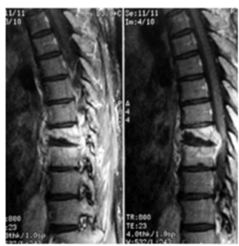
Q1. A 60-year-old man with treated TB 1 year ago presents with low back pain. MRI spine shows a lesion. What is the most appropriate next investigation?
- CECT spine
- Mantoux test
- CT chest
- Biopsy
Answer: B
Q2. A 30-year-old female post-RTA has persistent pain uncontrolled by analgesics. Compartment pressure is 90 mmHg with absent pulse. What is the treatment?
- Emergency fasciotomy
- Observation
- Increase IV analgesics
- External fixation
Answer: A
INI-CET Radiology 2026 Recall Questions with Answers
Q1. A radiologist is reviewing requests for gadolinium-based contrast MRI (ACR Group II agent). In which of the following clinical scenarios is contrast-enhanced MRI CONTRAINDICATED or requires special caution?
- A child with a documented normal renal function test report
- A 50-year-old patient with an eGFR of 30 mL/min/1.73 m²
- A 30-year-old healthy male without available renal function tests
- A 60-year-old diabetic male without available renal function tests
Answer: D
Q2. An elderly female patient presents to the emergency department with acute onset left flank pain radiating to the groin. What is the most appropriate imaging protocol for initial evaluation?
- Direct MRI of the abdomen and pelvis
- Ultrasound of the abdomen followed by CT if inconclusive
- Plain X-ray of the abdomen followed by CT urogram
- Non-contrast CT (NCCT) followed by contrast-enhanced CT (CECT)
Answer: B
INI-CET Psychiatry 2026 Recall Questions with Answers
Q1. Which statement correctly describes classical conditioning?
- Association between conditioned stimulus and conditioned response
- Association between unconditioned stimulus and unconditioned response
- An unconditioned stimulus produces a conditioned response after learning
- A conditioned stimulus triggers a conditioned response after learning
Answer: D
Q2. Which instruction is correct for a patient using nicotine replacement therapy?
- Gums are more effective than lozenges
- Patients should avoid liquids like tea or coffee 15 minutes before using a gum or a lozenge
- Correct timing of doses
- Proper storage of nicotine products
Answer: B
INI-CET Anaesthesia 2026 Recall Questions with Answers
Q1. A 40-year-old female is scheduled for parotid surgery and is administered general Anaesthesia. Approximately 10 minutes into the procedure, the following findings are noted:
- Rise in end-tidal CO₂ (EtCO₂)
- Temperature: 104°F (40°C)
- Heart rate: 150 bpm
- Blood pressure: 180/110 mmHg
What is the most likely diagnosis?
- Heat stroke
- Malignant hyperthermia
- Heat cramps
- Heat pyrexia
Answer: B
Q2. During a lumbar puncture procedure, the spinal needle traverses several anatomical layers in a defined sequence before reaching the subarachnoid space. Given the structures listed below, which option correctly represents the order in which they are pierced?
- Ligamentum flavum
- Supraspinous ligament
- Interspinous ligament
- Dura mater
- Subdural space
- Arachnoid mater
- Epidural space
Which option correctly represents the order in which they are pierced?
- 2 → 3 → 1 → 7 → 4 → 5 → 6
- 2 → 3 → 7 → 1 → 4 → 5 → 6
- 3 → 2 → 1 → 7 → 4 → 5 → 6
- 2 → 1 → 3 → 4 → 7 → 5 → 6
Answer: A
INI-CET Dermatology 2026 Recall Questions with Answers
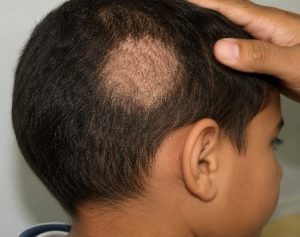
Q1. A patient presents with focal hair loss accompanied by pruritus and scalp scaling. Which of the following treatments is most suitable?
- Methotrexate
- Topical corticosteroids
- Oral antibiotics
- Oral antifungals
Answer: D
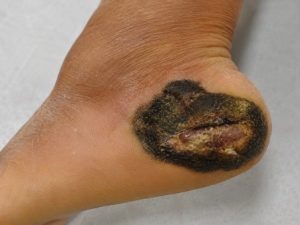
Q2. A patient is found to have a dark black lesion on the plantar surface of the foot. What is the most appropriate initial investigation?
- KOH mount
- Gram stain
- Skin biopsy
- Tzanck smear
Answer: C