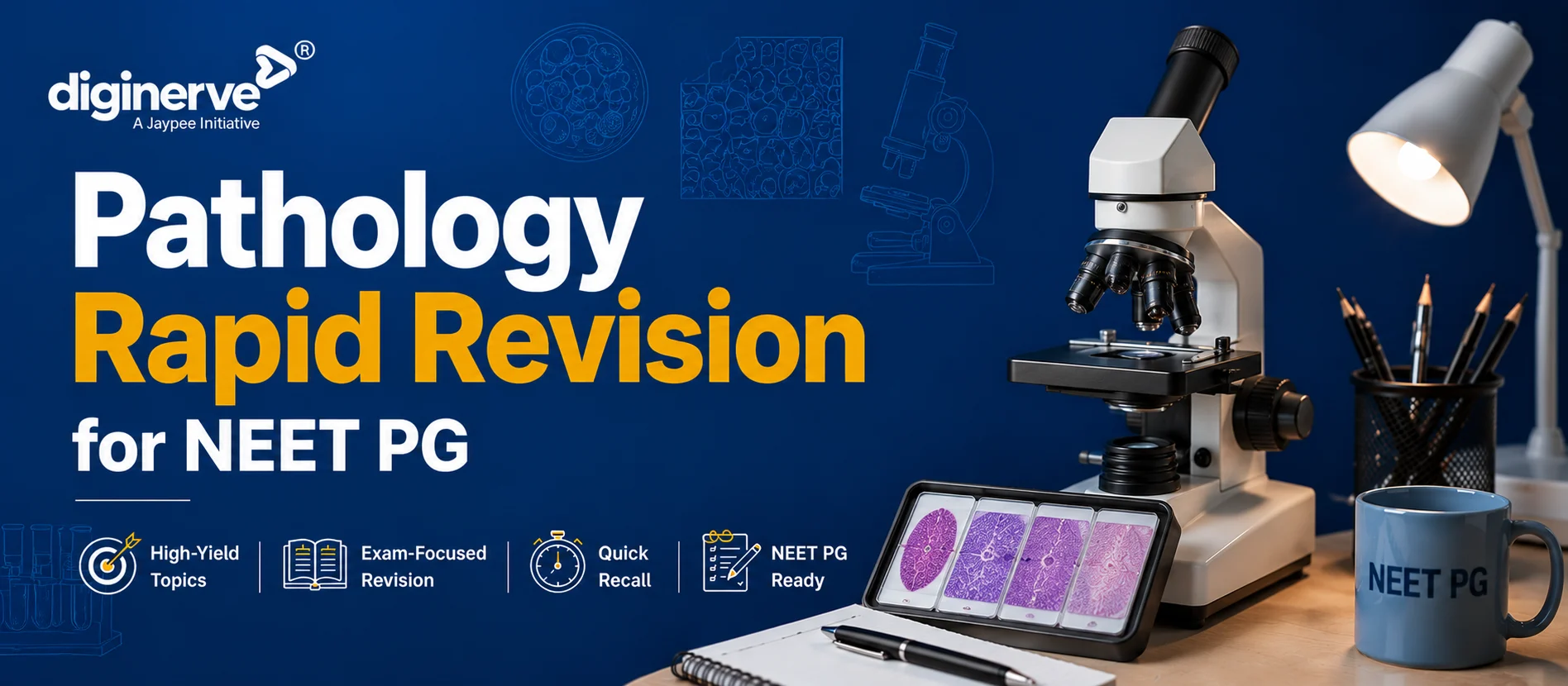
Pathology Rapid Revision for NEET PG 2026: High-Yield Notes, Important Topics, PYQs & Last-Minute Tips
Preparing Pathology for NEET PG 2026 requires strong conceptual understanding, repeated revision, and clinical correlation. Pathology is one of the most important subjects because it forms the foundation for Medicine, Surgery, Obstetrics and Gynecology, Pediatrics, Dermatology, and many other clinical subjects.
Important Topics Weightage in Pathology for NEET PG
Pathology in NEET PG generally includes questions from general pathology, haematology, systemic pathology, oncology, immunopathology, and clinical pathology. Certain areas are repeatedly tested and should be prioritised during rapid revision.
| Pathology Section | Importance of NEET PG |
| General Pathology | Very High |
| Hematology | Very High |
| Oncology | Very High |
| Immunopathology | High |
| Cardiovascular Pathology | High |
| Respiratory Pathology | High |
| Renal Pathology | Very High |
| Gastrointestinal Pathology | High |
| Liver and Pancreas Pathology | High |
| Endocrine Pathology | Moderate to High |
| Female Genital Tract Pathology | High |
| CNS Pathology | Moderate to High |
| Image-Based Pathology Questions | Very High |
For rapid revision, students should focus more on mechanisms of disease, haematological disorders, tumour markers, genetic mutations, histopathology slides, gross specimens, and clinically integrated questions.

High-Yield Pathology Topics for NEET PG 2026
During the final phase of NEET PG preparation, it is important to revise the most scoring topics first. These topics are commonly asked through clinical vignettes, image-based questions, lab reports, and integrated MCQs.
-
General Pathology
General Pathology is the foundation of the subject and is repeatedly tested in NEET PG. Focus on:
- Cell injury
- Reversible and irreversible cell injury
- Necrosis and apoptosis
- Inflammation
- Chemical mediators of inflammation
- Wound healing
- Edema
- Thrombosis
- Embolism
- Infarction
- Shock
- Amyloidosis
- Granulomatous inflammation
- Cellular adaptations
- Free radical injury
-
Hematology
Haematology is one of the highest-yield areas in Pathology for NEET PG. Important topics include:
- Anemia classification
- Iron deficiency anaemia
- Megaloblastic anemia
- Hemolytic anemia
- Sickle cell anaemia
- Thalassemia
- Aplastic anemia
- Acute leukemias
- Chronic leukemias
- Hodgkin lymphoma
- Non-Hodgkin lymphoma
- Multiple myeloma
- Platelet disorders
- Coagulation disorders
- Hemophilia
- DIC
- Blood transfusion reactions
-
Oncology
Oncology is very important because questions are often based on tumour markers, mutations, paraneoplastic syndromes, and histopathology. Revise:
- Hallmarks of cancer
- Tumour suppressor genes
- Oncogenes
- DNA repair genes
- Tumor markers
- Grading and staging
- Paraneoplastic syndromes
- Carcinogenesis
- Metastasis
- Molecular basis of cancer
- Common cancer-associated mutations
- Benign vs malignant tumours
-
Immunopathology
Immunopathology is frequently integrated with Microbiology, Medicine, and Dermatology. Focus on:
- Hypersensitivity reactions
- Autoimmune diseases
- SLE
- Rheumatoid arthritis
- Sjögren syndrome
- Systemic sclerosis
- Immunodeficiency disorders
- Transplant rejection
- Graft-versus-host disease
- HLA associations
- Granulomatous diseases
- Complement disorders
-
Cardiovascular Pathology
Cardiovascular Pathology is commonly tested through clinical scenarios and gross specimens. Important topics include:
- Atherosclerosis
- Myocardial infarction
- Rheumatic heart disease
- Infective endocarditis
- Cardiomyopathies
- Hypertension-related vascular changes
- Aneurysms
- Vasculitis
- Cardiac tumors
- Congenital heart disease pathology
- Vegetations
- Complications of myocardial infarction
-
Respiratory Pathology
Respiratory Pathology questions are often image-based and clinically integrated. Revise:
- COPD
- Emphysema
- Chronic bronchitis
- Bronchiectasis
- Asthma
- Pneumonia
- Tuberculosis
- ARDS
- Pulmonary embolism
- Pneumoconiosis
- Lung carcinoma
- Mesothelioma
- Interstitial lung diseases
- Pulmonary hypertension
-
Renal Pathology
Renal Pathology is a very high-yield section in NEET PG. Focus on:
- Nephritic syndrome
- Nephrotic syndrome
- Glomerulonephritis
- Minimal change disease
- Focal segmental glomerulosclerosis
- Membranous nephropathy
- IgA nephropathy
- Post-streptococcal glomerulonephritis
- Rapidly progressive glomerulonephritis
- Diabetic nephropathy
- Amyloidosis kidney
- Acute tubular necrosis
- Polycystic kidney disease
- Renal cell carcinoma
-
Gastrointestinal, Liver and Pancreas Pathology
GI and hepatobiliary pathology are important for integration with Medicine and Surgery. Important topics include:
- Esophagitis
- Barrett esophagus
- Gastritis
- Peptic ulcer disease
- Gastric carcinoma
- Inflammatory bowel disease
- Ulcerative colitis
- Crohn disease
- Colorectal carcinoma
- Polyps
- Viral hepatitis
- Cirrhosis
- Hepatocellular carcinoma
- Alcoholic liver disease
- Pancreatitis
- Pancreatic carcinoma
-
Endocrine Pathology
Endocrine Pathology is scoring when revised through tables and key features. Revise:
- Thyroiditis
- Graves disease
- Hashimoto thyroiditis
- Thyroid carcinoma
- Parathyroid disorders
- Diabetes mellitus pathology
- Diabetic complications
- Adrenal cortical disorders
- Pheochromocytoma
- Pituitary adenomas
- MEN syndromes
-
Female Genital Tract and Breast Pathology
This section is commonly integrated with Obstetrics and Gynaecology. Focus on:
- Cervical intraepithelial neoplasia
- Cervical carcinoma
- Endometrial hyperplasia
- Endometrial carcinoma
- Leiomyoma
- Ovarian tumors
- Germ cell tumors
- Epithelial ovarian tumors
- Breast carcinoma
- Fibroadenoma
- Phyllodes tumor
- Paget’s disease of breast
- Tumor markers in ovarian tumors
Must-Remember Tables for Pathology Rapid Revision
Tables are extremely useful for last-minute Pathology revision because they help compare diseases, mutations, tumour markers, and histopathological findings quickly.
Types of Necrosis
| Type of Necrosis | Common Example |
| Coagulative necrosis | Myocardial infarction |
| Liquefactive necrosis | Brain infarct, abscess |
| Caseous necrosis | Tuberculosis |
| Fat necrosis | Acute pancreatitis |
| Fibrinoid necrosis | Vasculitis, malignant hypertension |
| Gangrenous necrosis | Limb ischemia |
Important Tumour Markers
| Tumor Marker | Associated Condition |
| AFP | Hepatocellular carcinoma, yolk sac tumour |
| Beta-hCG | Choriocarcinoma, germ cell tumors |
| PSA | Prostate carcinoma |
| CA-125 | Ovarian carcinoma |
| CA 19-9 | Pancreatic carcinoma |
| CEA | Colorectal carcinoma |
| Calcitonin | Medullary thyroid carcinoma |
| Thyroglobulin | Papillary and follicular thyroid carcinoma |
| Chromogranin | Neuroendocrine tumors |
| LDH | Germ cell tumors, lymphoma |
Leukaemia: Key Associations
| Disease | Key Feature |
| AML | Auer rods |
| APML | t(15;17), DIC risk |
| ALL | Common in children |
| CML | Philadelphia chromosome, t(9;22) |
| CLL | Smudge cells |
| Hairy cell leukemia | TRAP positive, dry tap |
| Multiple myeloma | M spike, punched-out bone lesions |
Nephrotic and Nephritic Syndrome
| Feature | Nephrotic Syndrome | Nephritic Syndrome |
| Proteinuria | Massive | Mild to moderate |
| Hematuria | Usually absent | Common |
| Edema | Severe | Mild to moderate |
| Hypertension | Variable | Common |
| Casts | Fatty casts | RBC casts |
| Common Example | Minimal change disease | Post-streptococcal GN |
Hypersensitivity Reactions
| Type | Mechanism | Example |
| Type I | IgE-mediated | Anaphylaxis, asthma |
| Type II | Antibody-mediated cytotoxicity | Goodpasture syndrome |
| Type III | Immune complex-mediated | SLE, serum sickness |
| Type IV | T-cell mediated | Tuberculin test, contact dermatitis |
Image-Based Questions in Pathology for NEET PG
Image-based Pathology questions are very common in NEET PG. Students should revise gross specimens, histopathology slides, peripheral smears, bone marrow images, and immunohistochemistry patterns regularly.
Important image-based areas include:
- Caseous necrosis
- Granuloma
- Fatty change in the liver
- Atherosclerotic plaque
- Myocardial infarction gross specimen
- Rheumatic heart disease vegetations
- Infective endocarditis vegetations
- Lung carcinoma histology
- Tuberculosis granuloma
- Cirrhosis gross specimen
- Hepatocellular carcinoma
- Colon carcinoma
- Crohn’s disease and ulcerative colitis gross images
- Renal glomerular lesions
- Nephrotic and nephritic syndrome histology
- Papillary thyroid carcinoma
- Medullary thyroid carcinoma
- Breast carcinoma histology
- Reed-Sternberg cells
- Auer rods
- Smudge cells
- Sickle cells
- Target cells
- Schistocytes
- Multiple myeloma plasma cells
Previous Year Questions Trend in Pathology
Previous year questions show that NEET PG often tests Pathology through clinical case scenarios, image-based identification, lab findings, and integrated concepts. The trend is moving toward applied pathology, haematology, oncology, and systemic disease correlation.
Common PYQ trends include:
- Cell injury and necrosis
- Inflammation mediators
- Granuloma
- Amyloidosis
- Thrombosis and embolism
- Shock
- Anemia classification
- Iron deficiency anaemia
- Megaloblastic anemia
- Leukemia markers
- Lymphoma
- Multiple myeloma
- Tumor markers
- Oncogenes and tumor suppressor genes
- Hypersensitivity reactions
- SLE
- Myocardial infarction pathology
- Rheumatic heart disease
- Lung carcinoma
- Renal syndromes
- Nephrotic and nephritic syndrome
- Thyroid carcinoma
- Breast carcinoma
- Cervical carcinoma
Important MCQs in Pathology
Q1. Which type of necrosis is typically seen in tuberculosis?
A. Coagulative necrosis
B. Liquefactive necrosis
C. Caseous necrosis
D. Fibrinoid necrosis
Answer: C. Caseous necrosis
Tuberculosis classically shows caseous necrosis, which has a cheese-like appearance grossly and is associated with granulomatous inflammation.
Q2. Which tumour marker is commonly associated with ovarian carcinoma?
A. PSA
B. CA-125
C. AFP
D. Calcitonin
Answer: B. CA-125
CA-125 is commonly associated with epithelial ovarian carcinoma and is used for monitoring disease progression and recurrence.
Q3. Reed-Sternberg cells are seen in which disease?
A. Multiple myeloma
B. Hodgkin lymphoma
C. Chronic myeloid leukemia
D. Acute myeloid leukemia
Answer: B. Hodgkin lymphoma
Reed-Sternberg cells are characteristic of Hodgkin lymphoma and are typically CD15 and CD30 positive.
Q4. Which leukaemia is associated with the Philadelphia chromosome?
A. AML
B. ALL
C. CML
D. CLL
Answer: C. CML
Chronic myeloid leukaemia is associated with the Philadelphia chromosome due to t(9;22), which forms the BCR-ABL fusion gene.
Q5. Which cast is commonly seen in nephritic syndrome?
- Fatty cast
B. Waxy cast
C. RBC cast
D. Hyaline cast
Answer: C. RBC cast
Nephritic syndrome is characterised by hematuria, hypertension, reduced GFR, and RBC casts.
Rapid Revision Notes for Pathology
Here are some high-yield rapid revision points for NEET PG Pathology:
- Coagulative necrosis is seen in infarcts of solid organs except the brain.
- Liquefactive necrosis is seen in brain infarcts and abscesses.
- Caseous necrosis is classically seen in tuberculosis.
- Fat necrosis is seen in acute pancreatitis.
- Fibrinoid necrosis is seen in vasculitides and malignant hypertension.
- Granuloma consists of epithelioid cells, giant cells, lymphocytes, and fibroblasts.
- Amyloidosis shows apple-green birefringence under polarised light after Congo red staining.
- Virchow’s triad includes endothelial injury, stasis or turbulent blood flow, and hypercoagulability.
- Reed-Sternberg cells are seen in Hodgkin lymphoma.
- Auer rods are seen in AML.
- APML is associated with t(15;17) and risk of DIC.
- CML is associated with the Philadelphia chromosome t(9;22).
- CLL shows smudge cells.
- Multiple myeloma shows M spike and punched-out bone lesions.
- Iron deficiency anaemia shows microcytic hypochromic anaemia.
- Megaloblastic anaemia shows macro-ovalocytes and hypersegmented neutrophils.
- Sickle cell anaemia is due to a beta-globin gene mutation.
- Thalassemia shows target cells.
- Type I hypersensitivity is IgE-mediated.
- Type II hypersensitivity is antibody-mediated.
- Type III hypersensitivity is immune complex-mediated.
- Type IV hypersensitivity is T-cell mediated.
- AFP is increased in hepatocellular carcinoma and yolk sac tumour.
- CA-125 is associated with ovarian carcinoma.
- PSA is associated with prostate carcinoma.
- CEA is associated with colorectal carcinoma.
- Calcitonin is associated with medullary thyroid carcinoma.
- Papillary thyroid carcinoma shows Orphan Annie eye nuclei.
- Medullary thyroid carcinoma is associated with amyloid stroma.
- Minimal change disease is the most common cause of nephrotic syndrome in children.
- Post-streptococcal glomerulonephritis commonly presents as nephritic syndrome.
- Goodpasture syndrome shows linear IgG deposition.
- Granular immune deposits are seen in immune complex-mediated glomerulonephritis.
Last-Minute Tips to Revise Pathology for NEET PG 2026
Pathology revision should be concept-based, image-oriented, and clinically integrated. In the last few weeks before NEET PG, avoid reading lengthy theory and focus on high-yield concepts, tables, images, and PYQs.
- Revise haematology daily
Haematology is one of the most scoring areas in Pathology. Revise anaemia, leukaemias, lymphomas, coagulation disorders, peripheral smear findings, and bone marrow features regularly.
- Focus on tumour markers and mutations
Tumour markers, oncogenes, tumour suppressor genes, and translocations are frequently asked. Keep a separate table for quick revision.
- Practice image-based questions
Revise histopathology slides, gross specimens, peripheral smears, and immunohistochemistry images. Image-based Pathology questions can be highly scoring if you know the classic identifying features.
- Use tables for systemic pathology
Renal, lung, thyroid, breast, liver, and GI pathology should be revised using tables that compare diseases, morphology, markers, and clinical findings.
- Revise general pathology mechanisms
Cell injury, inflammation, necrosis, apoptosis, thrombosis, embolism, infarction, shock, and amyloidosis form the base for many integrated questions.
- Do not skip renal pathology
Renal pathology is repeatedly asked in NEET PG. Focus on nephrotic syndrome, nephritic syndrome, glomerulonephritis patterns, and immunofluorescence findings.
- Solve PYQs thoroughly
PYQs help identify repeated topics and common question patterns. After solving each PYQ, revise the related disease, marker, mutation, and morphology.
- Attempt MCQs regularly
Pathology is best revised through active recall. Practice MCQs daily and review incorrect answers to strengthen weak areas.
Recommended Resources for Pathology NEET PG Preparation
To strengthen your Pathology preparation for NEET PG 2026, use a combination of structured video lectures, QBank practice, PYQ analysis, and rapid revision resources.
You can revise Pathology with:
- DigiNerve NEET PG Courses
- Pathology QBank
- Pathology Previous Year Questions
- Pathology One Shot Revision Videos
- Subject-wise rapid revision notes
- Image-based question practice
- Related NEET PG PYQ blogs
- Previous subject revision blog
- Next subject revision blog
Frequently Asked Questions
Q1. What are the most important topics in Pathology for NEET PG?
Ans – The most important Pathology topics for NEET PG include general pathology, haematology, oncology, immunopathology, renal pathology, cardiovascular pathology, respiratory pathology, gastrointestinal pathology, liver pathology, endocrine pathology, and female genital tract pathology. Among these, haematology, oncology, renal pathology, and image-based pathology are especially high-yield.
Q2. How to revise Pathology quickly for NEET PG?
Ans – To revise Pathology quickly for NEET PG, focus on high-yield tables, tumour markers, haematology charts, histopathology images, PYQs, and MCQs. Prioritise general pathology, haematology, oncology, renal pathology, and systemic pathology. Avoid lengthy textbook reading during the final revision phase and use active recall.
Q3. Which Pathology topics are most repeated in NEET PG?
Ans – Repeated Pathology topics in NEET PG include necrosis, inflammation, granuloma, amyloidosis, anaemia, leukaemia, lymphoma, multiple myeloma, tumour markers, oncogenes, hypersensitivity reactions, nephrotic and nephritic syndromes, myocardial infarction, lung carcinoma, thyroid carcinoma, breast carcinoma, and cervical carcinoma.
Q4. Is rapid revision enough for NEET PG preparation?
Ans – Rapid revision is useful during the final stage of NEET PG preparation, but it should not be the only method of study. It works best after completing your first round of Pathology preparation and should be combined with MCQ practice, PYQ revision, image-based question practice, and repeated recall of high-yield concepts.