Ovulation Induction Protocols Explained (Clomiphene, Letrozole & Gonadotropins)
What is Ovulation Induction?
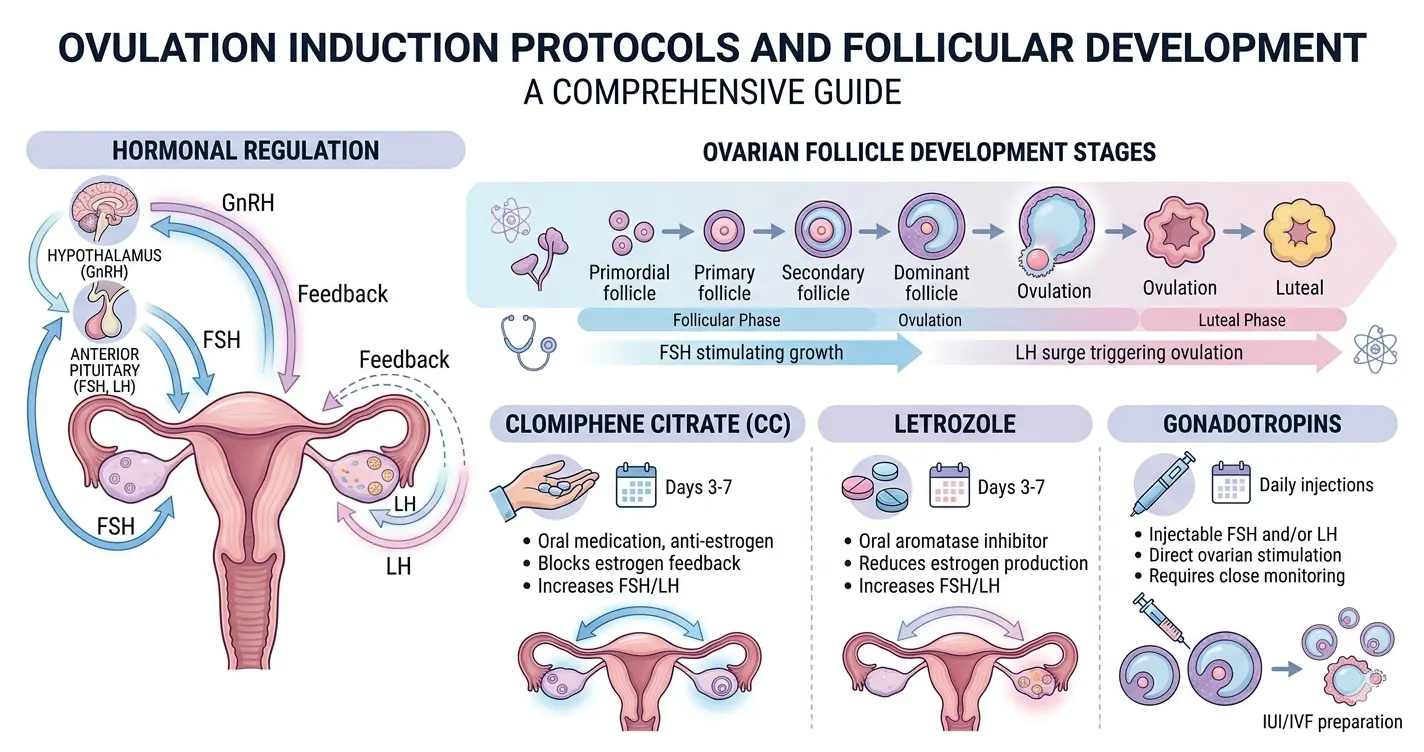 Ovulation induction refers to the pharmacological stimulation of ovarian follicular development to achieve ovulation in women with oligo-ovulation or anovulation. It involves targeted manipulation of the hypothalamic–pituitary–ovarian (HPO) axis, either by enhancing endogenous gonadotropin release or administering exogenous gonadotropins.
Physiologically, ovulation requires:
- Pulsatile GnRH secretion from the hypothalamus
- Release of FSH and LH from the anterior pituitary
- Follicular maturation and estradiol production
- Mid-cycle LH surge leading to ovulation
Disruption at any level of this axis can result in anovulation.
When is Ovulation Induction Used?
Ovulation induction protocols are indicated in:
- Chronic anovulation, especially in Polycystic Ovary Syndrome
- WHO Group II ovulatory dysfunction (normogonadotropic anovulation)
- Unexplained infertility
- Hypothalamic dysfunction (selected cases)
WHO classification (frequently tested concept):
- Group I: Hypogonadotropic hypogonadism
- Group II: Normogonadotropic (PCOS)
- Group III: Hypergonadotropic hypogonadism (ovarian failure)
Common Ovulation Induction Protocols
Clomiphene Citrate Protocol
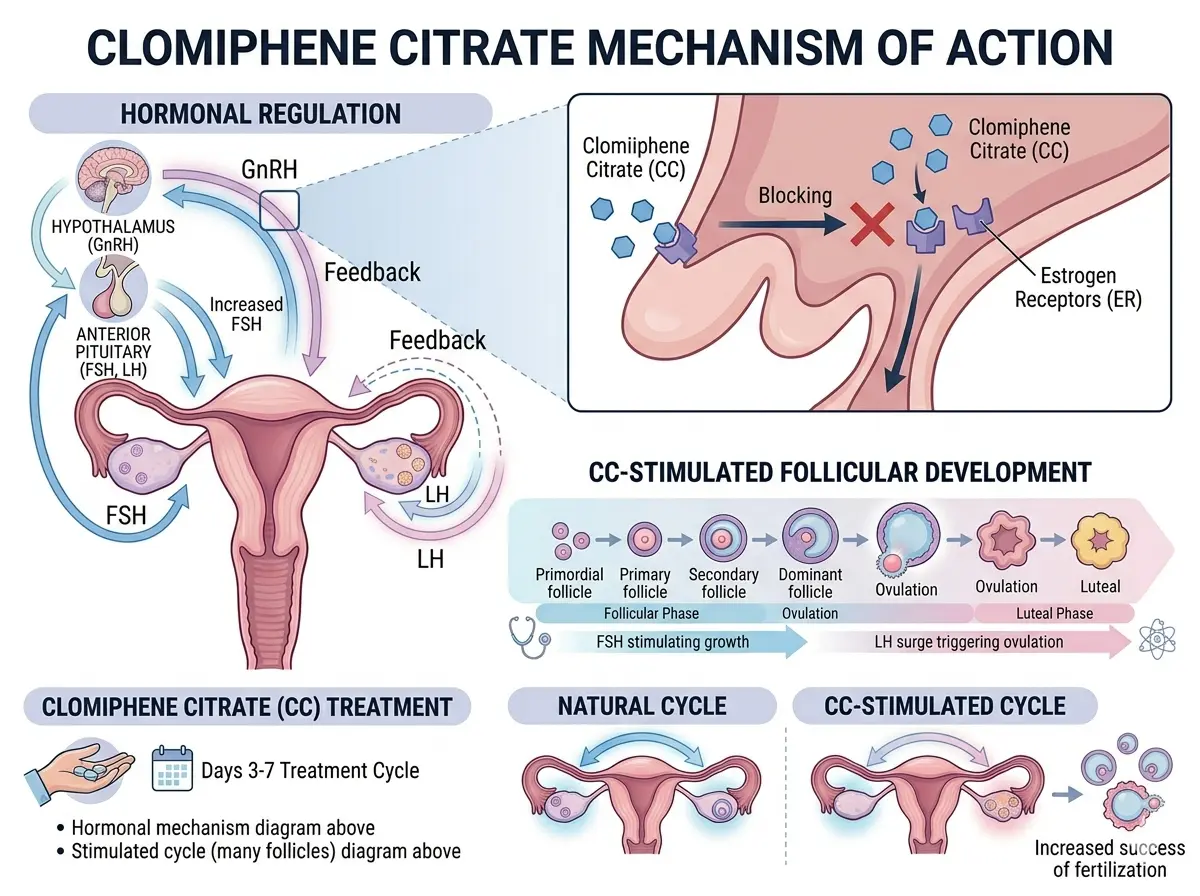 Drug Class: Selective Estrogen Receptor Modulator (SERM)
Clomiphene citrate mechanism:
- Competitive inhibition of estrogen receptors in the hypothalamus
- Removal of negative feedback → ↑ GnRH pulse frequency
- ↑ FSH and LH secretion → follicular recruitment
Standard Protocol:
- Initiation: Day 2–5 of the menstrual cycle
- Dose: 50 mg/day for 5 days
- Escalation: Up to 150 mg/day if no ovulation
Pharmacological Notes:
- Long half-life (~5–7 days)
- Anti-estrogenic peripheral effects
Limitations:
- Endometrial thinning
- Poor cervical mucus
- Risk of luteal phase defect
Letrozole Protocol
Drug Class: Aromatase inhibitor
Letrozole ovulation induction mechanism:
- Inhibits aromatase enzyme → ↓ conversion of androgens to estrogens
- Reduced estrogen levels → loss of negative feedback
- ↑ FSH secretion → folliculogenesis
Protocol:
- Initiation: Day 2–5
- Dose: 2.5–7.5 mg daily for 5 days
Pharmacodynamics:
- Short half-life (~45 hours)
- No persistent anti-estrogenic effect on the endometrium
Clinical Significance:
- Higher ovulation and live birth rates in PCOS
- Improved endometrial receptivity
Gonadotropin Protocol
Drugs Used:
- Recombinant FSH (rFSH)
- Human menopausal gonadotropin (hMG: FSH + LH activity)
Mechanism:
- Direct stimulation of ovarian follicles independent of hypothalamic-pituitary control
Protocols:
- Low-dose step-up: Gradual increase to avoid multifollicular development
- Step-down: High initial dose followed by reduction
Monitoring Requirements:
- Serial transvaginal ultrasonography
- Serum estradiol (E2) levels
Indications:
- Clomiphene-resistant anovulation
- Assisted reproductive techniques
Letrozole vs Clomiphene – Key Differences
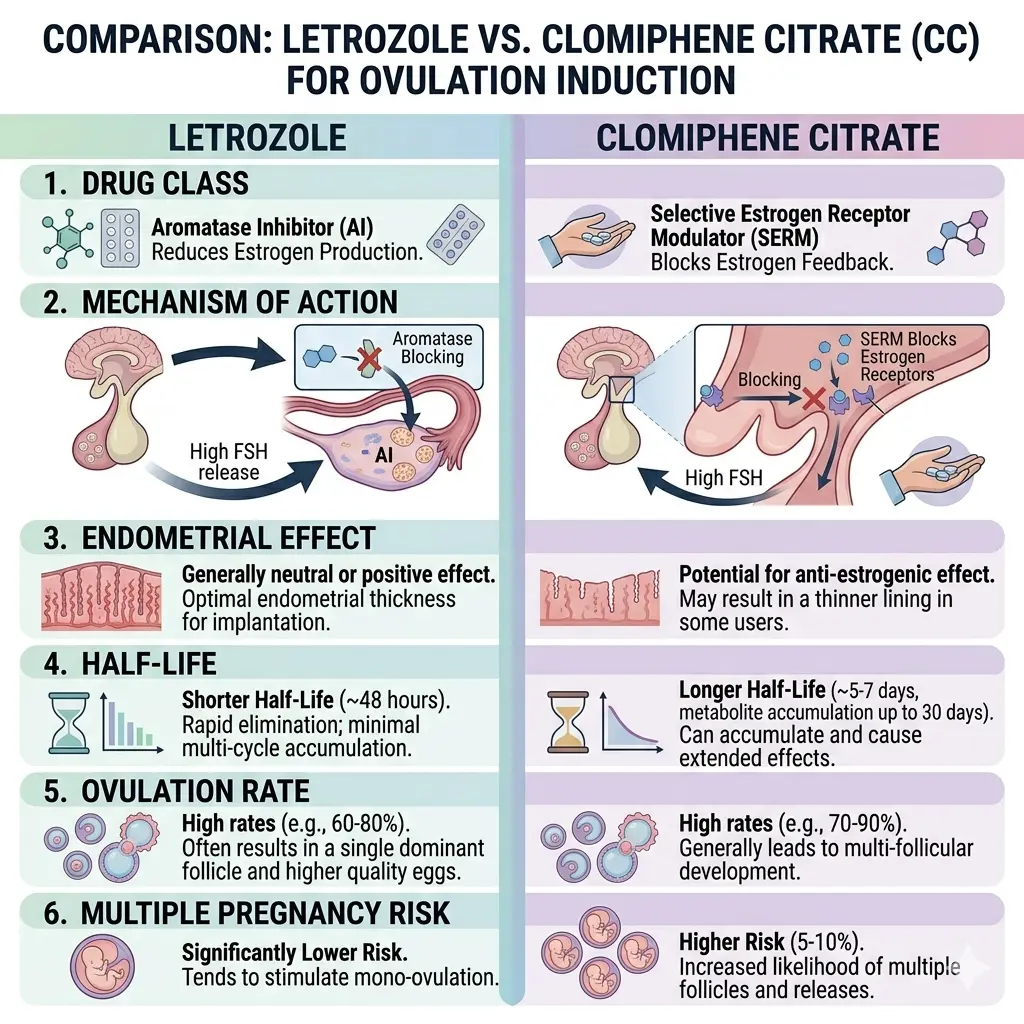
| Parameter | Letrozole | Clomiphene |
| Drug class | Aromatase inhibitor | SERM |
| Mechanism | ↓ Estrogen synthesis | Estrogen receptor blockade |
| Endometrial effect | Favorable | Anti-estrogenic |
| Half-life | Short | Long |
| Ovulation rate (PCOS) | Higher | Moderate |
| Multiple pregnancy risk | Lower | Higher |
The letrozole vs clomiphene comparison is clinically relevant, with letrozole now preferred in PCOS-related anovulation.
Types of Infertility Treatment Drugs
Ovulation induction drugs are categorised as:
- SERMs: Clomiphene citrate
- Aromatase inhibitors: Letrozole
- Gonadotropins: FSH, LH preparations
- Adjunct therapies:
- Insulin sensitisers (e.g., metformin)
- Luteal phase support (progesterone)
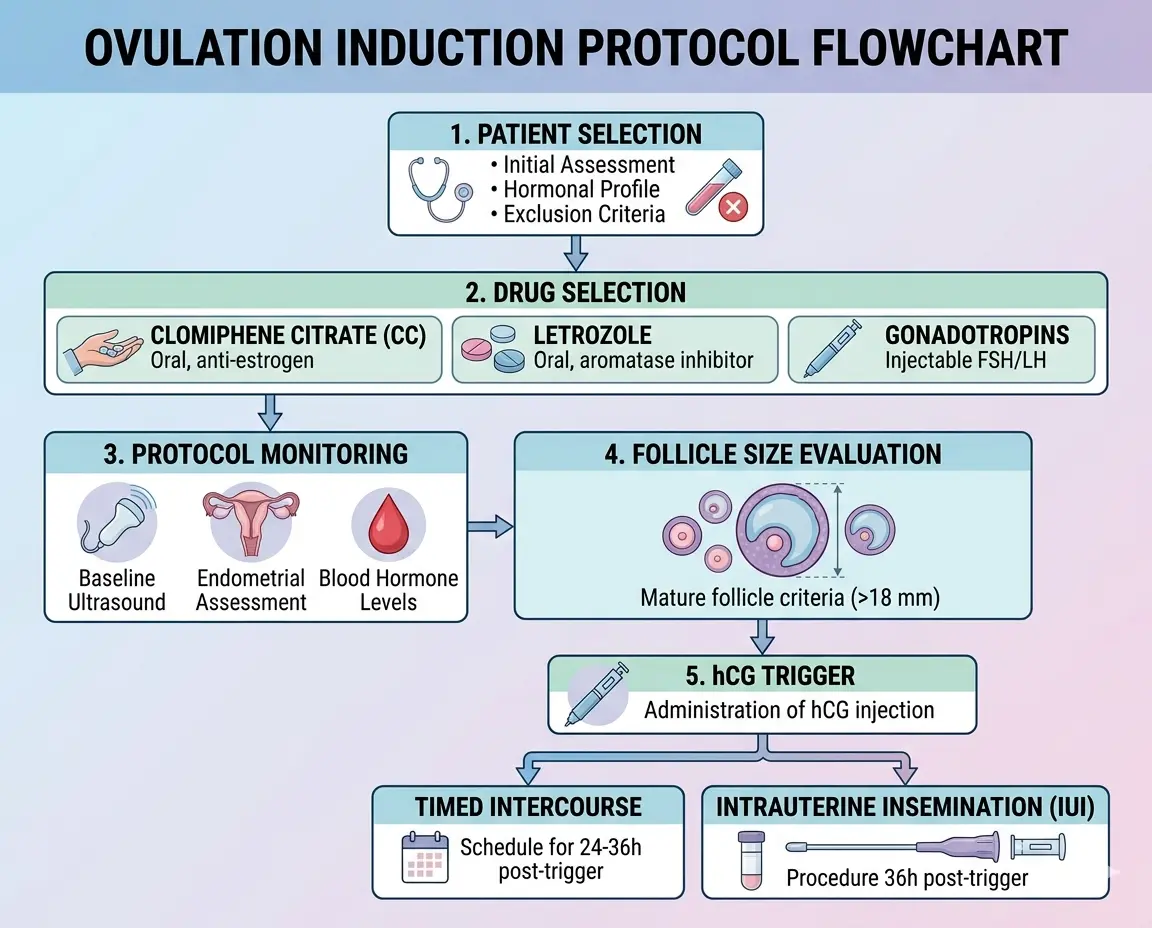
Step-by-Step Ovulation Induction Protocol
Patient Selection
- Confirm anovulation
- Assess ovarian reserve (AMH, AFC)
- Exclude:
- Tubal pathology
- Severe male factor infertility
Drug Selection
- PCOS → Letrozole
- General anovulation → Clomiphene/Letrozole
- Resistant cases → Gonadotropins
Monitoring
- Follicular tracking starting Day 9–10
- Dominant follicle: 18–20 mm
- Endometrial thickness: ≥7 mm
Trigger & Timing
- Administration of hCG trigger (mimics LH surge)
- Ovulation occurs ~36 hours post-trigger
- Timed intercourse or intrauterine insemination is planned accordingly
Risks and Complications
Ovarian Hyperstimulation Syndrome (OHSS)
- More common with gonadotropins
- Pathophysiology: Increased vascular permeability due to VEGF
- Features: Ascites, enlarged ovaries, hemoconcentration
Multiple Pregnancy
- Clomiphene: Increased twin rate
- Gonadotropins: Higher risk of multifetal gestation
Other Adverse Effects
- Functional ovarian cysts
- Vasomotor symptoms (clomiphene)
- Abdominal discomfort
Ovulation Induction in PCOS Patients
Key pathophysiology:
- Increased LH: FSH ratio
- Hyperandrogenism
- Arrested follicular development
Management principles:
- Letrozole as a first-line agent
- Lifestyle modification (weight reduction improves ovulation)
- Metformin in insulin-resistant individuals
Clomiphene resistance is defined as failure to ovulate at the maximum dosage.
Clinical Tips for Gynaecologists
- Aim for mono-follicular development to reduce complications
- Use the lowest effective dose
- Avoid excessive estradiol rise
- Individualise treatment based on ovarian reserve and BMI
Role of IUI in Ovulation Induction
Ovulation induction is frequently combined with intrauterine insemination to enhance conception rates.
- Indicated in unexplained infertility and mild male factor
- Synchronisation with ovulation improves fertilisation probability
High-Yield Revision Points
- Letrozole = Drug of choice in PCOS ovulation induction
- Clomiphene = SERM with anti-estrogenic effects
- Gonadotropins = Highest efficacy but highest risk (OHSS, multiples)
- Follicle size for trigger = 18–20 mm
- Clomiphene resistance = No ovulation at 150 mg dose
Ovulation induction protocols form a critical component of infertility management, integrating reproductive physiology with pharmacological intervention. A clear understanding of the clomiphene citrate mechanism, letrozole ovulation induction, and gonadotropin therapy infertility protocols is essential for clinical application and examinations. The transition toward letrozole as a preferred agent, particularly in PCOS, reflects evidence-based evolution in infertility treatment drugs.
NEET PG Pattern Questions:
Q1. The primary mechanism of action of clomiphene citrate is:
A. Direct ovarian stimulation
B. Aromatase inhibition
C. Estrogen receptor blockade in the hypothalamus
D. Progesterone receptor activation
Answer: C. Estrogen receptor blockade in the hypothalamus
Explanation: This increases GnRH secretion, leading to increased FSH and LH.
Q2. Ovulation trigger with hCG is usually given when the dominant follicle reaches:
A. 10–12 mm
B. 12–14 mm
C. 18–20 mm
D. 22–24 mm
Answer: C. 18–20 mm
Q3.Assertion (A): Letrozole is preferred over clomiphene in ovulation induction for PCOS.
Reason (R): Letrozole improves endometrial thickness compared to clomiphene.
- Both A and R are true, and R explains A
B. Both A and R are true, but R does not explain A
C. A is true, R is false
D. A is false, R is true
Answer: A. Both A and R are true, and R explains A
Q4. Clomiphene citrate is classified as:
A. Aromatase inhibitor
B. Selective estrogen receptor modulator
C. Progesterone analogue
D. GnRH analogue
Answer: B. Selective estrogen receptor modulator
Frequently Asked Questions:
Q1. What is the first-line drug for ovulation induction in PCOS?
Ans – Letrozole
Q2. What is the mechanism of clomiphene citrate?
Ans – Estrogen receptor blockade at hypothalamus → ↑ GnRH → ↑ FSH/LH
Q3. Define clomiphene resistance.
Ans – Failure to ovulate at 150 mg/day
Q4. What is the major complication of gonadotropin therapy?
Ans – Ovarian Hyperstimulation Syndrome (OHSS)
Q5. What is the ideal follicular size for an ovulation trigger?
Ans – 18–20 mm
Q6. Why is letrozole preferred over clomiphene?
Ans – Better endometrial effects and improved ovulation rates