Common Fractures in Orthopedics: Mechanism, Classification & Emergency Management
Fractures are among the most frequently encountered conditions in orthopedic practice and form a high-yield topic for orthopedic PG entrance exams. A strong understanding of common fractures, their mechanisms, classifications, and emergency management is essential for medical students, interns, and residents preparing for exams as well as for real-world clinical practice.
This blog covers important fractures for orthopedics with a concise, exam-oriented approach.
What Is a Fracture?
A fracture is a break in the continuity of bone caused by trauma, stress, or pathological conditions. Orthopedic fractures can range from simple, undisplaced injuries to complex, life-threatening polytrauma cases.
Mechanism of Injury in Orthopedic Fractures
Understanding the mechanism helps predict fracture patterns and associated injuries.
Common Mechanisms
- Direct trauma – e.g., bumper injury causing tibial fracture
- Indirect trauma – e.g., fall on outstretched hand (FOOSH), causing distal radius fracture
- Twisting forces – spiral fractures of the tibia
- Axial loading – calcaneal fractures
- Muscle pull – avulsion fractures (ASIS, greater trochanter)
Classification of Fractures (Exam-Oriented)
Fracture classification is crucial for orthopedic fracture management and is commonly tested in exams.
Based on Skin Integrity
- Closed fracture
- Open fracture (Gustilo-Anderson classification)
Based on Fracture Pattern

- Transverse
- Oblique
- Spiral
- Comminuted
- Greenstick (children)
Based on Aetiology
- Traumatic
- Pathological
- Stress fractures
Common Fractures in Orthopedics (High-Yield List)
Upper Limb Fractures
- Clavicle fracture – common in young adults, fall on the shoulder
- Proximal humerus fracture – elderly, osteoporotic patients
- Supracondylar fracture of the humerus in children, risk of neurovascular injury
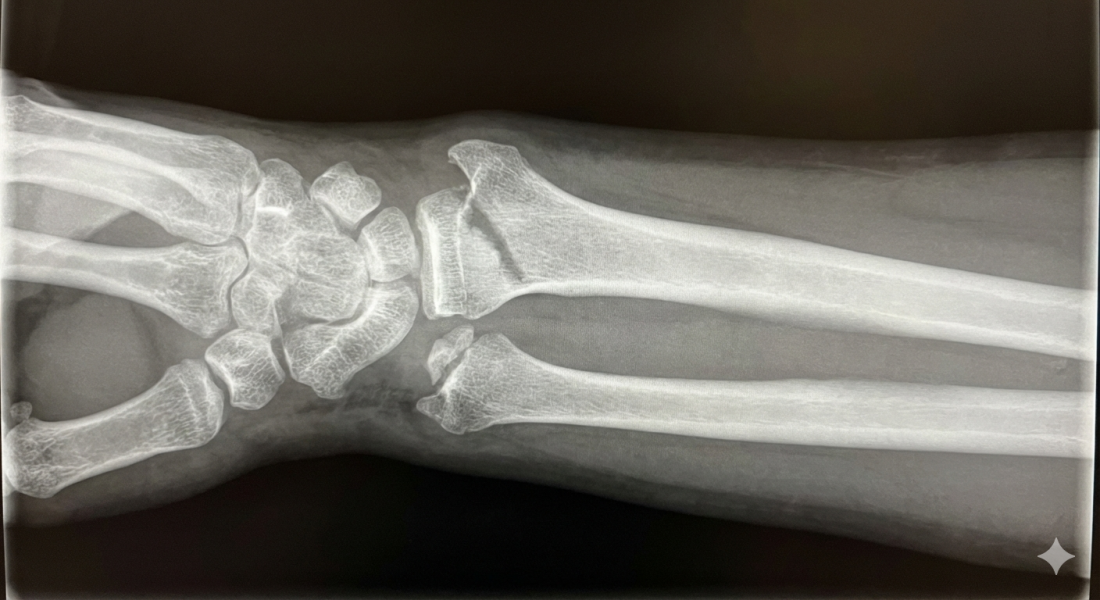
- Colles’ fracture – FOOSH, dinner fork deformity
- Scaphoid fracture – snuffbox tenderness, risk of avascular necrosis
Lower Limb Fractures
- Neck of femur fracture – elderly, high mortality
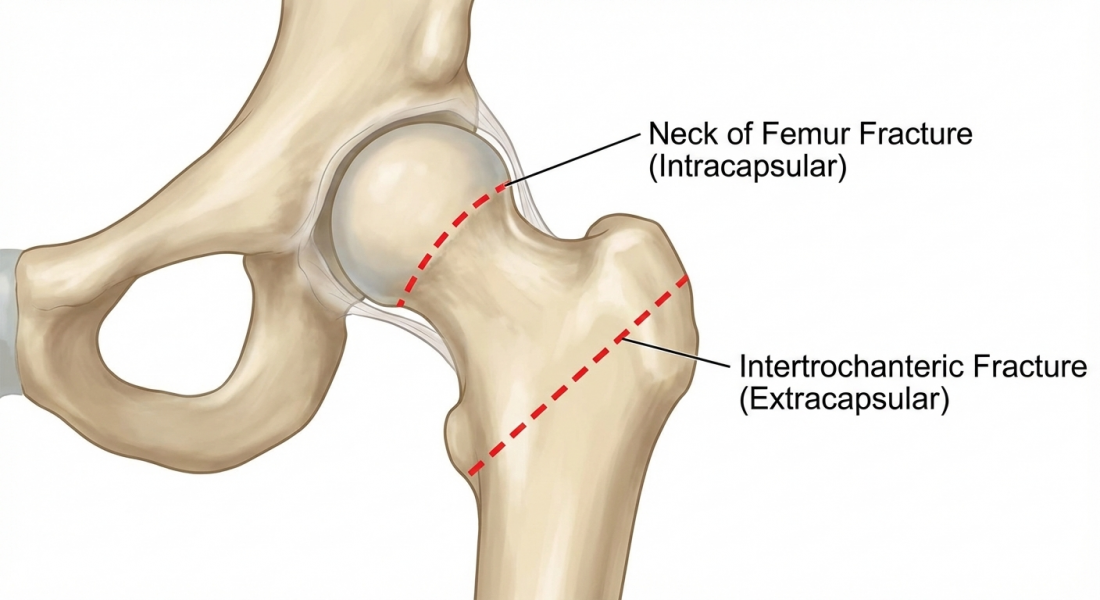
- Intertrochanteric fracture – unstable fractures
- Shaft of femur fracture – high-energy trauma
- Tibial shaft fracture – the most common long bone fracture
- Ankle fractures (Pott’s fracture) – rotational injuries
- Calcaneal fracture – fall from height
Emergency Management of Orthopedic Fractures
Early and appropriate management reduces complications and improves outcomes.
Primary Survey (ATLS Principles)
- Airway, Breathing, Circulation
- Control hemorrhage
- Treat shock
Local Examination
- Deformity
- Swelling
- Open wounds
- Neurovascular status (pulse, sensation, motor function)
Immediate Management Steps
- Immobilisation using splints or slabs
- Analgesia
- Wound care in open fractures
- IV antibiotics and tetanus prophylaxis
- Reduction (if indicated)
- Radiological evaluation (X-ray, CT if required)
Definitive Orthopedic Fracture Management
Management depends on fracture type, displacement, patient age, and functional demand.
Conservative
- Casts
- Traction
- Functional bracing
Operative
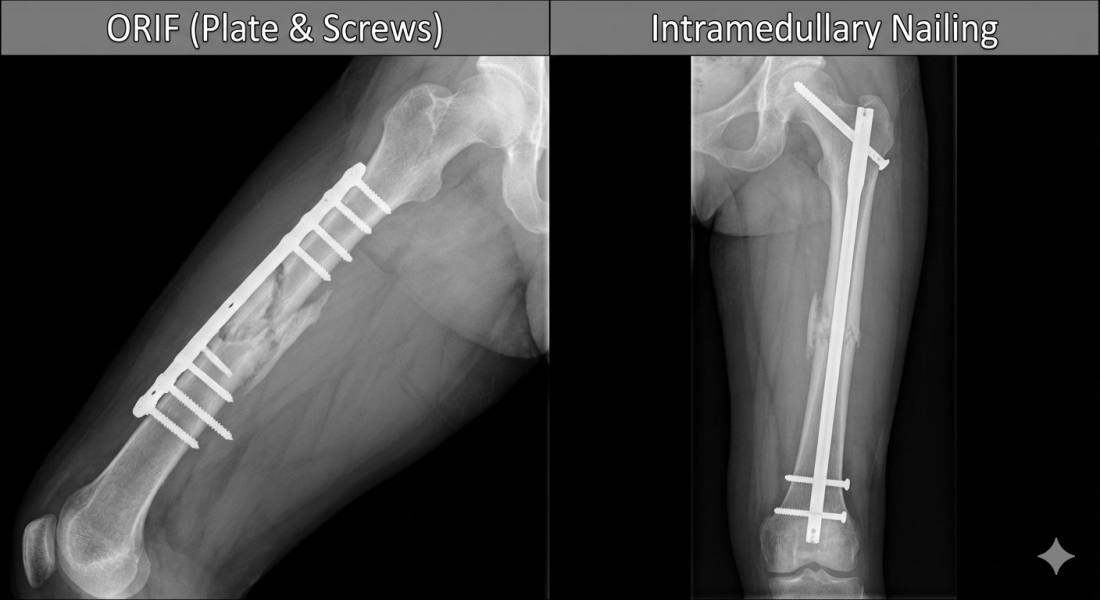
- Open reduction and internal fixation (ORIF)
- Intramedullary nailing
- External fixation
- Arthroplasty (e.g., neck of femur fractures)
Why These Fractures Matter for Ortho PG Exams
- Frequently asked in NEET PG, INI-CET, FMGE, and orthopedic residency exams
- Image-based questions
- Case-based management scenarios
- Viva and OSCE relevance
Mastering common fractures in orthopedics builds a strong foundation for both exams and clinical practice.
A systematic approach to orthopedic fractures—understanding the mechanism, classification, and emergency management—is key for exam success and patient safety. Focusing on important fractures for orthopedics and revising them clinically and radiologically will significantly boost performance in fractures for ortho PG preparation.
Frequently Asked Questions:
- What are the most common fractures in orthopedics?
Ans – The most common orthopedic fractures include clavicle fracture, distal radius (Colles’) fracture, supracondylar fracture of the humerus in children, neck of femur fracture in the elderly, tibial shaft fracture, and ankle fractures. These are also high-yield topics for orthopedic PG exams. - Why is understanding the mechanism of injury important in orthopedic fractures?
Ans – The mechanism of injury helps predict the fracture pattern, associated soft tissue or neurovascular damage, and guides appropriate orthopaedic fracture management, especially in emergency settings. - Which fracture classifications are important for ortho PG preparation?
Ans – High-yield classifications include Gustilo-Anderson classification for open fractures, fracture pattern classification (transverse, oblique, spiral), and anatomical classifications such as intracapsular and extracapsular fractures of the neck of the femur. - What is the first step in the emergency management of fractures?
Ans – The first step is following ATLS principles—airway, breathing, and circulation—followed by haemorrhage control, immobilisation of the injured limb, pain management, and assessment of neurovascular status. - Which fractures are most frequently asked about in fractures for ortho PG exams?
Ans – Neck of femur fracture, supracondylar humerus fracture, Colles’ fracture, scaphoid fracture, shaft of femur fracture, and open fractures are commonly tested due to their clinical importance and management principles.