Molluscum Contagiosum Explained: Causes, Symptoms, and How It Spreads
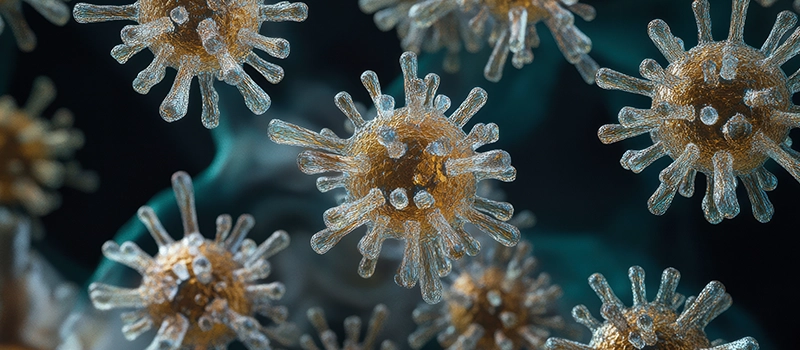
Molluscum Contagiosum (MC) is a self-limiting cutaneous caused by the molluscum contagiosum virus (MCV), a double-stranded DNA virus from the Poxviridae family. It presents frequently in clinical dermatology, especially among children and immunocompromised patients. A clear understanding of its aetiology, clinical features, transmission routes and management strategies is important for NEET PG aspirants and medical trainees.
Aetiology and Virology
- Causative agent: Molluscum contagiosum virus (MCV) with four subtypes (MCV-1 to MCV-4).
- Epidemiology: MCV-1 is the most common in children, MCV-2 is often seen in adults and immunocompromised individuals.
Transmission
Molluscum contagiosum is highly contagious and spreads via multiple routes:
1. Direct Skin to Skin Contact
- Common in children during play or in athletes through contact sports (e.g. wrestling).
- Adults may acquire genital lesions via sexual contact.
2. Fomites (Indirect Contact)
- Through contaminated objects like towels, razors, gym mats, toys and clothing.
3. Autoinoculation
- Scratching or shaving over existing lesions can transfer the virus to adjacent skin areas.
4. Nosocomial Transmission
- Reported in immunocompromised settings or during skin procedures with inadequate hygiene.
Infection is more likely to occur if the skin barrier is compromised, such as in patients with atopic dermatitis or those undergoing immunosuppressive therapy.
Clinical Features
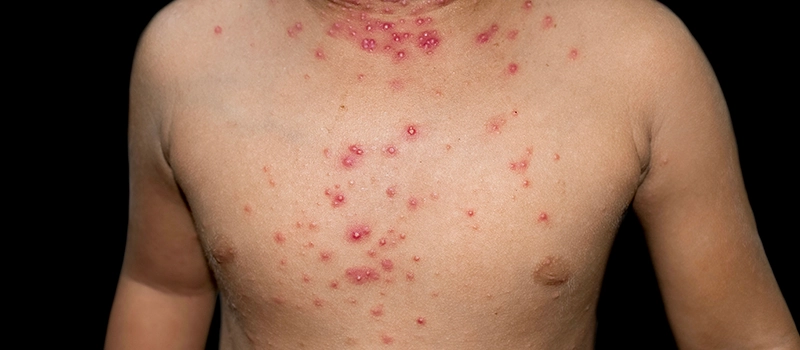
- Lesions: Dome-shaped, pearly, flesh-coloured papules with a central umbilication.
- Size: Typically, 2-5mm.
- Location: For children, it is the face, trunk and limbs and for adults, it’s the genital area, lower abdomen and thighs.
- It is asymptomatic but may cause pruritus or become inflamed if secondarily infected.
Risk Factors:
- Age: Predominantly affects children aged 1-10 years.
- Immunosuppression: Higher incidence in individuals with HIV/AIDS or those on immunosuppressive therapy.
- Atopic dermatitis: Compromised skin barrier facilitates viral entry.
- Crowded living conditions and participation in contact sports.
Diagnosis:
- Clinical Evaluation: Diagnosis is primarily clinical based on the characteristic appearance of lesions.
- Histopathology: Reveal molluscum bodies (Henderson-Patterson bodies) within the epidermis with large eosinophilic cytoplasmic inclusions displacing the nucleus peripherally.
Treatment Options for Molluscum Contagiosum:
Though spontaneous resolution occurs within 6-12 months treatment may be warranted for cosmetic reasons, prevention of spread or in immunocompromised individuals.
Topical Therapies
- Cantharidin: Blistering agent applied by clinicians.
- Imiquimod: Immune response modifier.
- Benzoyl peroxide, retinoids, salicylic acid and brazier sodium
Physical Therapies
- Curettage: Scrapping off lesions.
- Cryotherapy: Freezing lesions with liquid nitrogen.
- Laser therapy: Reserved for resistant or cosmetic cases.
Systemic Therapy
- Rarely needed, cimetidine or antivirals may be considered in widespread or immunocompromised cases.
Complications:
- Secondary bacterial infection of lesions.
- Eczematous reactions surrounding lesions.
- Scarring or pigmentation changes post-resolution.
- Psychosocial impact due to cosmetic concerns.
Molluscum contagiosum is a common, benign viral skin infection with distinctive clinical features. While often self-resolving, understanding its presentation, transmission, and management is crucial for medical professionals, particularly in dermatology and venereology. Early recognition in patient education can mitigate transmission and associated complications.
Frequently Asked Questions:
Q1. How does molluscum contagiosum spread?
Molluscum contagiosum, a viral skin infection, spreads primarily through direct skin-to-skin contact, especially with someone who has visible bumps. It can also spread through indirect contact with contaminated objects like towels, clothing, or pool equipment, and occasionally via sexual contact.
Q2. What is the root cause of molluscum?
Molluscum contagiosum is caused by a virus that is a member of the poxvirus family. You can get the infection in different ways. This is a common infection in children and occurs when a child comes into direct contact with a skin lesion or an object that has the virus on it. (A skin lesion is an abnormal area of skin.)
Q3. What is the final stage of molluscum?
During the molluscum contagiosum final stages, the burst crater lesions develop into red-coloured sores. At this stage, secondary infections can infect the open sores.
Q4. How do you remove molluscum seeds?
Removing the papules: Your provider could use different therapies to remove visible signs of the condition from your skin by freezing the papule (cryotherapy), scraping out the papule (curettage) or using a laser to remove it (laser therapy).